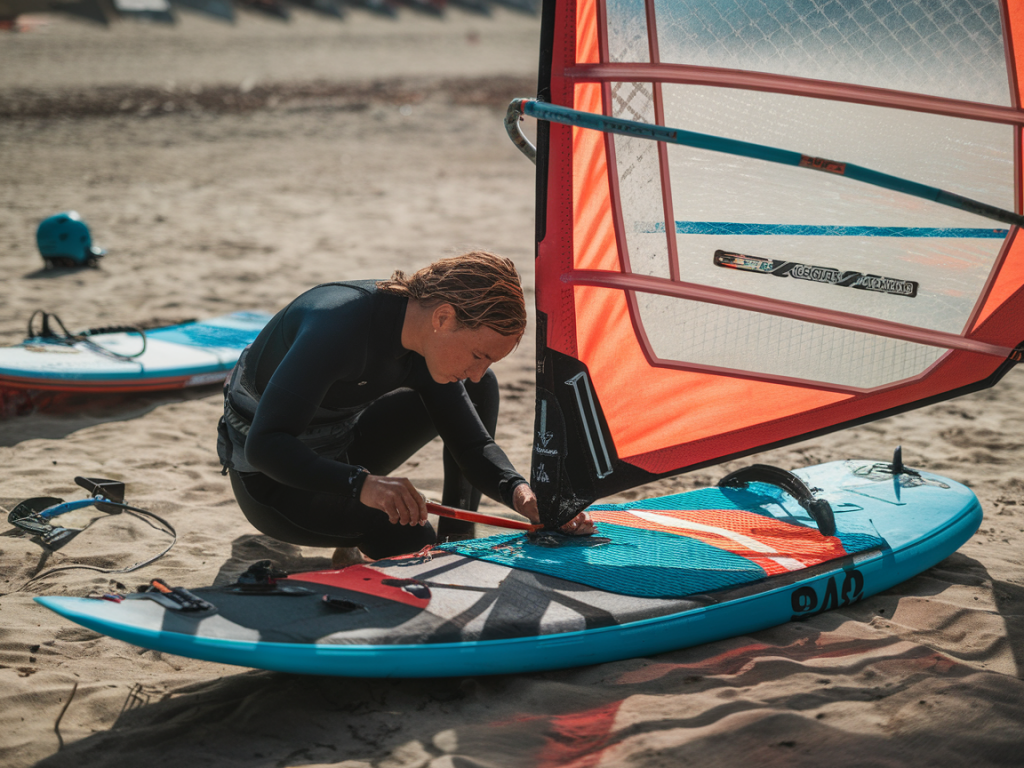
I remember one Famara session when a gust came through and ripped a batten clean out of my sail while I was still a hundred metres from shore. My heart sank — that sail was a Duotone I rely on for light-wind days. Over the years I’ve learned to carry a small, practical repair kit and the skills to do fast field fixes that get me back on the water or at least leave my gear safe enough to transport home. Below I share the quick, do-it-yourself fixes I use most often for common problems: dings in boards, ripped battens, snapped outhauls and other small disasters you can expect around Famara’s choppy Atlantic conditions.
What to pack in your on-board repair kit
Before we get into fixes, here’s the compact kit I never sail without. Everything fits in a small dry bag and has saved many sessions:
- Epoxy ding repair kit (two-part, fast-curing for small holes)
- Self-adhesive repair patches (fibreglass or UHMW for quick board surface patches)
- Waterproof tape (Tesa 4964 or specialized mast/tape)
- Batton sleeves or duct tape (for temporary batten repairs)
- Spare battens (if you can carry them; at least one)
- Cordage and shock cord (3–5mm, for reties and temporary outhaul)
- Cable ties and small shackles (sturdy and multi-use)
- Multi-tool and small file/sandpaper (for trimming battens, sanding ding resin)
- Gloves and small container for mixing epoxy
- Marker (to mark cracks, alignment)
| Item | Why |
| Epoxy kit | Seal holes, prevent water ingress |
| Adhesive patches | Quick waterproof cover for cosmetic damage |
| Spare batten/cable ties | Repair ripped battens or lash split ends |
| Shock cord/cordage | Temporary outhaul, tie-downs |
Board dings: quick fixes to stop water ingress
A ding that lets water into the core is the most urgent issue — if water gets into the EPS or wood core, the board gets heavy and can rot internally. On Famara I often fix small to medium dings on the beach so I can either keep sailing or at least carry the board home safely.
Quick emergency repair (10–30 minutes)
- Rinse the ding with fresh water to wash out sand and salt.
- Dry as much as you can with a towel; blow air under the laminate if possible.
- Apply a self-adhesive patch over the ding. For larger holes, fold the patch so it overlaps by at least 2–3 cm.
- If you have epoxy, mix a fast-curing batch and push it into the hole, then lay a small piece of fibreglass on top and smooth more epoxy over it. Let it skin over before transporting.
What I do at home or the next day
- Remove the temporary patch, sand around the ding, refill with epoxy or specialised foam filler, and laminate properly with fibreglass if the repair is structural.
- Any soft spots under the laminate mean you need a proper workshop repair — don’t delay.
Ripped battens: make the sail usable again
Sail battens can be ripped out of their pockets or the pocket can tear open. I’ve seen sails from Duotone and Fanatic designs suffer this when the wave impact or a bad sheet angle pulls hard on the battens. The goal is to keep the batten aligned and stopped from flaying around.
Field repair for a batten popped out or a small pocket tear (5–20 minutes)
- Push the batten back into position if it’s intact. If it slid out due to a snapped batten end, you can temporarily insert a plastic tube or cut piece of garden stake as a core to hold the shape.
- Sew the pocket closed temporarily with strong cord (Palmers knot or whipstitch). I use doubled shock cord or waxed polyester line. It won’t look pretty but it holds.
- If the batten itself is fractured, either trim the broken end with a file so it sits in the pocket without catching, or replace it with a spare batten. If you don’t have a full spare, a carbon or aluminium garden stake can sometimes hold shape for low-power sailing.
- Tape the outside of the pocket with waterproof mast tape to stop salt and wind from making the tear worse.
Preventive tip: I mark the batten ends with coloured tape and inspect pockets after heavy jibes. Regularly oiling or greasing batten ends isn’t necessary, but keeping the pocket clean prevents chafe.
Snapped outhaul, downhaul or boom lines: quick reties
A snapped outhaul usually happens at the knot or from corrosion on shackles. On Famara, salt can play havoc if you keep lines wet and knotted. A functional outhaul is essential for tuning — but you can rig a workable temporary line quickly.
Temporary outhaul in the water (5–10 minutes)
- Replace broken line with shock cord or cordage. Tie a reliable knot: a Figure-8 follow-through or a double fisherman's for loops, and a bowline variant for quick releases.
- If the clew eye is damaged, use a small shackle or lash a loop of cord around the clew and boom end, secured with a few strong knots and a cable tie to stop slippage.
- Use small shackles to connect freed lines — keep a spare shackle in your kit. Stainless steel is best but rinse and dry after use to avoid seizing.
On the beach: make it more robust
- Replace temporary cord with thicker rope (3–5mm) and back knots with a secondary safety line. Tape knots under strain to avoid chafe.
- If the mast base line or downhaul hardware has failed, use a combination of shackles and cord to produce a similar mechanical advantage until you can visit the shop.
Small mast or boom damage
Cracked booms or mast tips are serious. Minor scuffs and small cracks in mast sections can sometimes be taped for transport, but I never sail on a visibly cracked mast. For cosmetic crazing or surface dents:
- Sand to remove sharp edges, tape heavily, and transport to a proper repairer.
- For aluminium booms that have bent slightly, gentle bending back might work if it’s within low-load areas — otherwise replace.
Safety and decision-making on-site
Knowing when to attempt a repair and when to stop is crucial. My guiding rule on Famara is: if the damage risks more injury or further catastrophic failure (e.g., mast collapse, core-soaked board), pack up and get off the water. If the fix restores essential control and you’re within safe distance of shore, a field repair is fine.
- Assess stress points: Is the fix in a high-load area? If yes, don’t trust a tape-only solution for long sessions.
- Distance to shore: Never attempt risky repairs far from land. Swim small board repairs back; use your leash and conserve energy.
- Weather window: If gusts are increasing, opt to end the session. A good repair is useless if a storm rips things further.
Brand-specific notes: Duotone and Fanatic
Both Duotone and Fanatic build reliable kit, but even the best gear can fail under heavy use. For Duotone sails I carry extra batten ends and small batten sleeves because their batten channels are fairly tidy; a small sleeve or taped pocket will protect the sail. With Fanatic boards, the construction is robust but dings through the top layer can expose the core — I keep extra adhesive patches sized for typical Fanatic single-construction board edges.
When you get home, always send damaged Duotone sails or Fanatic boards to an authorised repairer if the structural integrity is in doubt — warranties and manufacturer repairs will usually save you money in the long run.
Practical examples from Famara
One day I returned with a Duotone sail where a lower batten had ripped the pocket at the clew. On the beach I pushed the batten back in, stitched the pocket with shock cord, taped the area on both sides and used a spare 4mm line for a backup outhaul. It wasn’t pretty, but it kept me sailing for an extra hour and allowed me to get back to the car without the sail flapping open and tearing further.
Another time a hairline ding had opened into the board core after a heavy landing on a wave. I rinsed, dried as much as possible, filled the hole with fast epoxy and covered with a patch. At home the board went in for a full glass repair, but the field work prevented waterlogging and made transport easy.
Bring patience, a calm head and a small kit — on Famara these three things often make the difference between walking home and finishing your session with a big grin.