Snorkeling

Where to photograph sea turtles off Punta Mujeres: best snorkel entry points, tide windows and camera settings

Where to photograph sea turtles off Punta Mujeres: best snorkel entry points, tide windows and camera settings

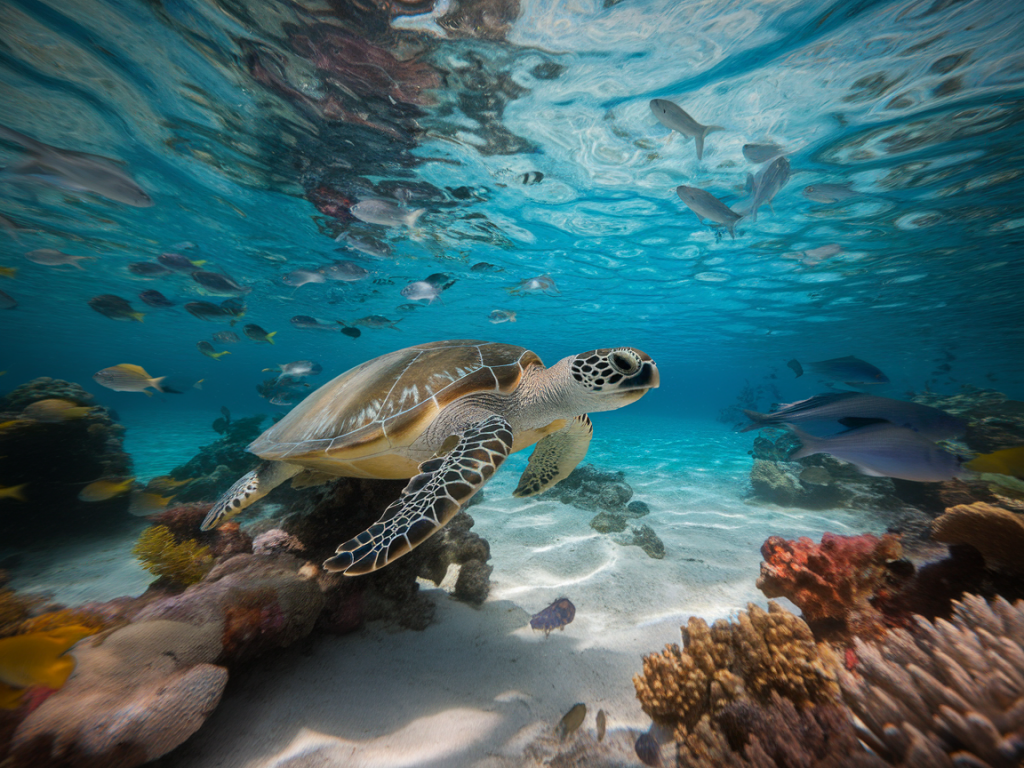
I’m lucky enough to snorkel with sea turtles around Lanzarote often, and Punta Mujeres has become one of my favourite spots to photograph them. The little bay, rocky outcrops and nearby seagrass patches attract both juvenile and adult turtles, so with the right entry point, tide window and camera setup you can capture calm, natural behaviour rather than stressed or flighty animals. Below I share the practical entry spots I use, tide and current tips, plus camera settings and compositional tricks that work for me in the Atlantic light here.

Why Punta Mujeres works for turtle photography

Punta Mujeres offers a mix of shallow lagoons, volcanic rock pools and nearby deeper gutters. Turtles commonly visit to graze on seagrass or rest near the rocks. For photographers the advantages are:

  • Clear water in many seasons — visibility often 10–20m on calmer days.
  • Multiple shallow entries so you can approach quietly and avoid boats.
  • Good light angles in the morning and late afternoon for side lighting and backlight.
  • That said, conditions vary rapidly with swell and wind, so choosing the right tide and entry matters as much as camera gear.

    Best snorkel entry points

    I regularly use three entries depending on wind direction and swell. I’ve marked them here by description — they’re easy to find from the small car park and boardwalk that runs along the coast.

  • Playa Chica / small pebble beach — my go-to when the swell is low. This sheltered pocket gives a gentle slope into water 1–3m deep before dropping off. Great for approaching turtles grazing on seagrass patches without stirring too much sand.
  • Rocky cove near the natural pools (Charco) — best on calm, offshore wind days. Enter carefully from the flat rocks and slip in where there’s a natural channel. The cove funnels turtles from the deeper gutter into shallow resting areas.
  • Small jetty / swim platform — useful when there’s a slight swell and you need a higher, safer entry point. Jumping in from the platform gives quick access to mid-depth areas where turtles often transit between feeding spots.
  • Always scout the entry from land first. Look for slippery algae on rocks, sudden drop-offs and any boat activity. I carry reef boots for rocky entries and always put on my mask and snorkel at the waterline rather than on the rocks.

    Tide windows and current advice

    Tide and current are crucial. In my experience at Punta Mujeres:

  • Low to mid tide is usually best for photographing turtles grazing in seagrass; the shallows are exposed enough that turtles feed closer to the surface.
  • Incoming tide can be excellent because it brings cleaner water into the bay and reduces stirred sediment — visibility improves and turtles tend to move into shallower feeding grounds.
  • Strong outgoing tide can create swift channels between rocks — avoid these unless you’re confident in your fitness and buoyancy control.
  • I check wind and swell forecasts (Windy app is my favourite) and use local tide tables. If wind is from the north-east, the bay stays protected and visibility is best. When the trade winds pick up from the north, the surface can be choppy and turtles retreat to deeper or more sheltered areas.

    Ethics and approach: respect the turtles

    Photographing wildlife is a privilege. I always follow these rules and ask readers to respect them:

  • Do not touch or chase turtles. If a turtle changes direction or dives, give it space.
  • Keep at least several metres distance and let the animal approach if it’s curious.
  • Avoid swimming directly towards a turtle from above — approach at an angle and remain level with the animal.
  • Do not feed or attempt to lure turtles with bread or bait — it harms their health and natural behaviour.
  • When people crowd a small cove, turtles hide or leave — patience and a low-profile approach yield the best shots.

    Camera gear I use and recommend

    I shoot most turtle sessions with a compact mirrorless or a high-end compact camera in an underwater housing. Equipment that balances manoeuvrability and image quality works best while snorkeling.

  • Camera — Sony a7C or Canon R10 in a compact housing for flexibility. For a lighter option I often use the Olympus Tough TG-6 with a dome port for wide-angle shots.
  • Housing & ports — small dome port for wide-angle scenes; flat macro port if you want tight portraits of turtle faces and details.
  • Lenses — a wide-angle or fisheye for full-body turtle shots and environmental context; a 60mm macro or equivalent for close-up detail when visibility and proximity allow.
  • Accessories — wrist leash, neoprene camera float, and a red or magenta filter if you’re shooting without strobes in deeper blue water.
  • Camera settings and a quick reference table

    These are the settings I most often use while snorkeling at Punta Mujeres. Adjust them based on light and depth.

    ModeSettings
    Shutter1/250–1/500s to freeze flapping flippers and sudden turtle turns
    Aperturef/4–f/8 for a balance of depth of field and sharpness
    ISOAuto ISO with upper limit 800–1600 depending on light
    White balanceAuto or custom (daylight) — shoot RAW to correct later
    FocusContinuous AF (tracking), small AF point or expandable zone
    Shooting modeBurst mode for action sequences

    In bright shallow water I push shutter speed for crisp detail. If I’m trying for soft motion of a turtle gliding, I’ll lower shutter a touch and keep ISO minimal. Shooting RAW is essential — underwater light skews colours and RAW gives you maximum correction latitude.

    Composition tips and behaviour cues

    Composition is as much about reading turtle behaviour as it is about framing:

  • Get level with the turtle — eye-level shots feel more intimate than top-down images.
  • Include habitat — a bit of seagrass, rock or underwater wall adds context and tells a story.
  • Watch the tail and nose — turtles often telegraph turns with small fin movements; anticipate and start shooting.
  • Use negative space — leaving room in the direction the turtle is moving creates a sense of motion.
  • For close-ups, focus on the eye. Even if the shell is out of focus, a sharp eye sells the image.
  • One of my favourite mornings at Punta Mujeres I waited patiently near a shallow seagrass patch and a juvenile turtle slowly swam within arm’s length. Because I kept my movements minimal and breathed calmly, the turtle grazed for several minutes. I got low, framed its face against the sunlit seagrass and used a short burst to capture a blink and mouthful of seaweed — those small moments make for memorable photos.

    Practical tips for a successful session

  • Arrive early — mornings before swimmers and boats are best for light and animal activity.
  • Bring a buddy — safer and easier to swap lenses or pass you equipment if needed.
  • Keep sessions short — prolonged presence stresses animals; 30–60 minutes in one spot is plenty.
  • Rinse gear with fresh water immediately after — salt and sand quickly damage housings and zippers.
  • If you’d like, I can recommend specific housing brands and entry points on a map, or help plan a guided photo snorkel day around Punta Mujeres. I often guide photographers and have local knowledge of recent turtle sightings — drop me a line through the contact page on Scubalanzarote Co if you want personalised advice.
    You should also check the following news:

    Choosing the right travel-sized regulator for weekend scubas: performance checks and service intervals I trust
    Gear Reviews

    Choosing the right travel-sized regulator for weekend scubas: performance checks and service intervals I trust

    When I pack for a weekend of diving around Lanzarote — usually a mix of shallow reefs, volcanic...

    Step-by-step plan to complete a guided shore dive at playa chica with ear equalisation strategy, entry timing and emergency signals
    Diving

    Step-by-step plan to complete a guided shore dive at playa chica with ear equalisation strategy, entry timing and emergency signals

    Playa Chica is one of those spots that never gets old for me — sheltered bay, excellent...