Playa Chica is one of those spots that never gets old for me — sheltered bay, excellent visibility most days, and a manageable shore entry that makes it perfect for guided dives, especially with mixed-ability groups. Over the years I’ve developed a reliable step-by-step routine I use when leading shore dives here, with particular attention to ear equalisation, timing the entry to currents and swell, and clear emergency signals that everyone remembers. Below I share that routine so you can plan a safe, comfortable guided dive at Playa Chica.
Before the dive: briefing, gear and ear prep
I always start the briefing on dry land, with the group seated where we can see the bay. My briefing covers the dive plan (route, max depth, bottom time), environmental considerations (marine life to watch, protected zones), and specific shore-entry and exit points. I use a simple handout or a quick photo on my phone showing the route and depth profile — visuals help people remember.
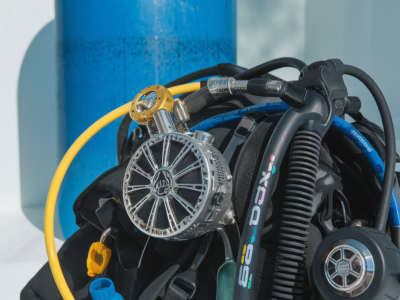
Gear-wise I ask divers to have their kit dry-assembled: BCD partially inflated, regulator clipped in, mask and fins accessible, weights on or ready to don. For beginners I recommend a low-volume mask (Atomic, Cressi or Mares make good options) — it’s easier to clear and equalise. I also suggest silicone ear-drops like H2O Guard only if they usually help you feel comfortable; otherwise, avoid introducing anything new on the day.
Ear equalisation is where many dives go sideways. I explain and practise equalisation techniques before putting a mask on:
- Frenzel technique: pinch the nose, make the throat movement as if saying “k” or “g” to push air up the Eustachian tubes — this is the most effective without raising chest pressure.
- Valsalva as a backup: pinch the nose and gently blow — useful but can be overdone; I warn not to force it hard.
- Swallowing and jaw wiggles: simple actions that help equalise at shallow depths.
I get everyone to demonstrate a Frenzel on land; if someone can’t, we make a plan: very slow descent, frequent stops, and buddy support. I also ask about recent colds, allergies or ear issues — if someone mentions a recent upper respiratory infection I advise they sit this one out or consult a physician.
Timing the entry: tides, swell and shaded windows
Playa Chica’s conditions vary with swell and tidal state. My rule of thumb: aim for the window of lowest current and smallest swell. Locals know the early morning or late afternoon often gives calmer water, but check the swell forecast and talk to the dive center — they’ll know recent patterns.
Specific things I watch for before putting fins on:
- Consult the tide table — strong ebb can create a current across the bay.
- Observe the shore for surge over the rocks; if waves break hard, wait.
- Ask the group if anyone is nervous about waves; err on the side of a later entry if you have nervous divers.
When conditions are marginal I stagger entries: the most experienced divers go first, then the rest. This reduces crowding in the entry zone and allows the guide to assess how the water feels before assisting more people.
Step-by-step shore entry and descent
My standard shore-entry routine at Playa Chica:
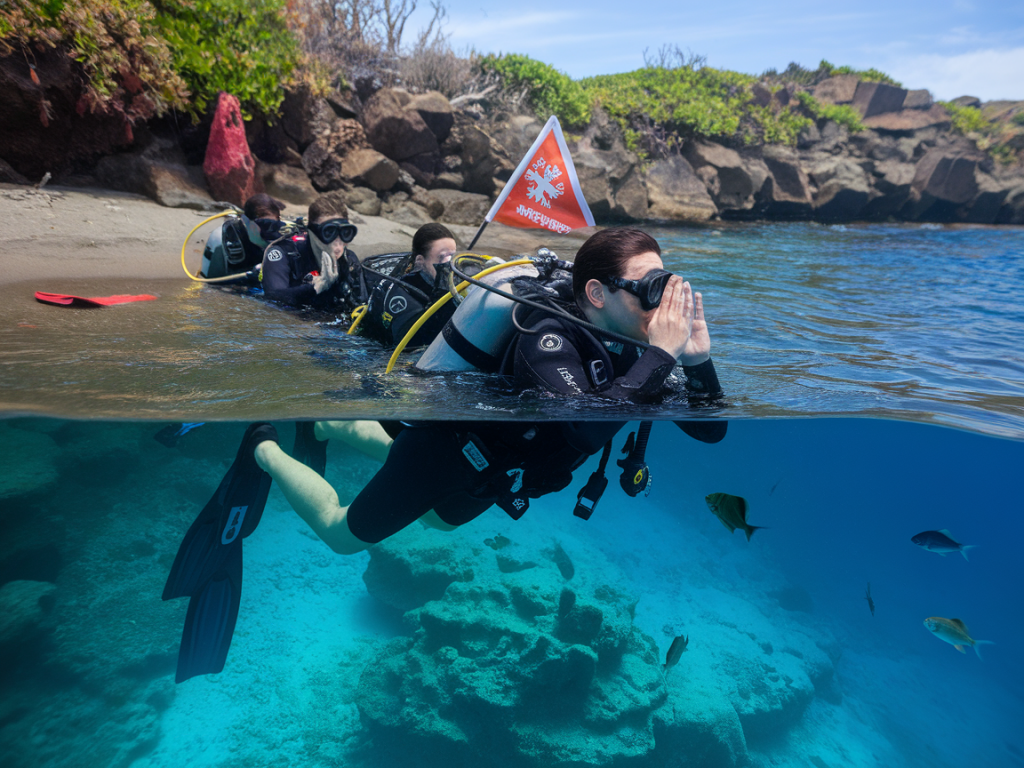
- Approach in mask and fins, BCD at minimal inflation, regulator in mouth but not staged — I prefer people breathing from the surface regulator to settle before getting wet.
- Walk carefully across the shallow rock shelf; I point out slippery patches and a safe place to sit or kneel if needed.
- Sit, put on fins if people haven’t already, and do a final buddy check: mask, air, releases, weights (a short “M.A.R.W.” verbal check works well).
- Enter feet-first into waist-deep water, then switch to a forward roll or a dolphin kick depending on the group’s comfort and the slope.
- Once in deeper water, inflate BCD slightly, establish neutral buoyancy and collect the group for a surface-orientation: confirm direction, landmarks and the descent signal.
Descent is slow and controlled. I set a descent line for less experienced divers (a temporary rope to an anchored shot line works) and stop every 1–2 metres to equalise. I emphasise small, frequent equalisation — don’t wait until you feel pain.
Ear equalisation strategy during descent
Equalisation is a continuous process. My practical steps:
- Before the descent, remind everyone of the Frenzel and jaw-wiggle techniques.
- Descend in short increments: stop, equalise, signal OK, then continue. I say out loud the intended depth increments: “we’ll go to 3m, equalise, then 5m…” which calms nervous divers.
- If a diver signals “equalisation problem” I stop the descent and have them ascend slightly (0.5–1m), try equalising again, and then continue more slowly. If still blocked after a few attempts, we abort the descent for that diver and head back to the surface safely.
- For divers who struggle repeatedly I’ll use the “buddy-assisted equalisation” technique: the buddy tucks in close and performs gentle jaw movements and swallowing cues, reassuring and pacing the descent.
Signs of trouble I watch for: persistent headache, severe ear pain, dizziness, or vomitting. These are red flags for barotrauma or inner ear issues — surface immediately and seek medical evaluation.
Emergency signals and hand signals to rehearse
Clear emergency signals are non-negotiable. I rehearse these on the surface right after the gear check so they’re fresh in everyone’s mind:
- OK: circle thumb and index finger (standard).
- Up now/Ascend: flat hand, palm up, cutting motion or thumbs-up depending on local tradition.
- Problem/Help: hand waving side-to-side near the head (use this for equipment issues or ear pain).
- Lost buddy: arms outstretched and wave.
- Surface and wait: one arm up straight (stay with the boat or shore) and point to shore if required.
I also demonstrate an audible distress plan for surface problems: three short whistle blasts or three short blasts on a signaling device means “I need help.” I carry a whistle and an SMB with me on every shore dive; if a diver surfaces separated from the group they should inflate the SMB and attract attention.
Emergency scenarios I prepare for
Common scenarios and my immediate actions:
- Equalisation failure: stop, ascend a little, try again. If unresolved, abort for that diver and return to shore for assessment.
- Panic at the surface: keep distance, approach from behind or side, calm voice, secure the diver with a BCD hold and inflate only if needed; get them to the shore or boat quickly.
- Unconscious diver at surface: signal for help, bring them onto shore, open airway, call emergency services and start CPR if necessary.
- Equipment freeflow or regulator failure: switch to alternate air source, buddy-breathe if necessary, make a controlled ascent using the buddy’s air.
| Signal | Meaning | Action |
|---|---|---|
| OK (circle) | All good | Continue dive |
| Hand wave by head | Equalisation/pain | Stop, ascend slightly, try equalising |
| Palm up, cutting motion | Ascend now | Controlled ascent, buddy check |
| Three whistle blasts | Need help | Surface assistance, call emergency |
Running through these scenarios out loud reduces confusion if something happens. I also make sure the dive center has a first aid kit, oxygen, and a plan to reach emergency services quickly — Playa Chica is close to town, but you still need a documented emergency plan.
On every guided dive I aim to be proactive: small, frequent equalisation checks, conservative depth limits for those who need them, and clear repeatable signals. Playa Chica is forgiving when you respect its quirks — take your time, communicate, and don’t push through ear pain. If you want, next time you’re here I’ll show you my favorite shallow reef route where we often spot octopus and seahorses while keeping depth comfortable for everyone.