Diving

Where to hire a nitrox-ready tank near puerto del carmen, what paperwork to check and typical extra costs

Where to hire a nitrox-ready tank near puerto del carmen, what paperwork to check and typical extra costs

When I’m planning dives from Puerto del Carmen and need nitrox I try to keep things simple: find a trustworthy shop with a clear nitrox policy, check the paperwork before I walk out the door, and budget for a few small extras. Over the years I’ve hired nitrox-ready cylinders from several outfits in town and learned which questions save time and which hidden costs tend to pop up on the bill.

Where to look for nitrox-ready tanks in Puerto del Carmen

Puerto del Carmen is compact and most dive businesses are clustered along Avenida de las Playas and the harbour. You’ll typically find three types of operators who offer nitrox fills:

  • Full-service PADI/SSI dive centres that run daily guided dives and course programmes.
  • Small local dive shops that focus on tank fills, rentals and guided shore dives.
  • Equipment rental shops that may provide occasional nitrox fills for visiting tech divers.
  • In my experience the full-service dive centres usually have the most consistent nitrox procedures: on-site mixing or dedicated compressor rooms, nitrox analyzers, and clear paperwork. Shops that primarily rent gear sometimes outsource fills or only offer pre-mixed nitrox blends, so always ask how the mix is produced.

    What to ask before you hire a nitrox tank

    Make these quick checks before you hand over your card or sign anything. I run through them aloud so nothing gets missed:

  • Do you fill to the exact mix requested (e.g. ENRIX 32%) or only offer a standard blend?
  • Do you mix nitrox in-house or use pre-filled cylinders?
  • What analyzer(s) do you use — and can I see the reading? (I prefer shops that use a calibrated analyzer like an Analox, PortAnalyser or similar.)
  • Is the tank visually and hydro-tested/inspection stickers up to date?
  • What regulator first stage is fitted (DIN or INT) and will I need an adapter?
  • Is there an additional fee for the nitrox mix, analyzer use, or rental deposit?
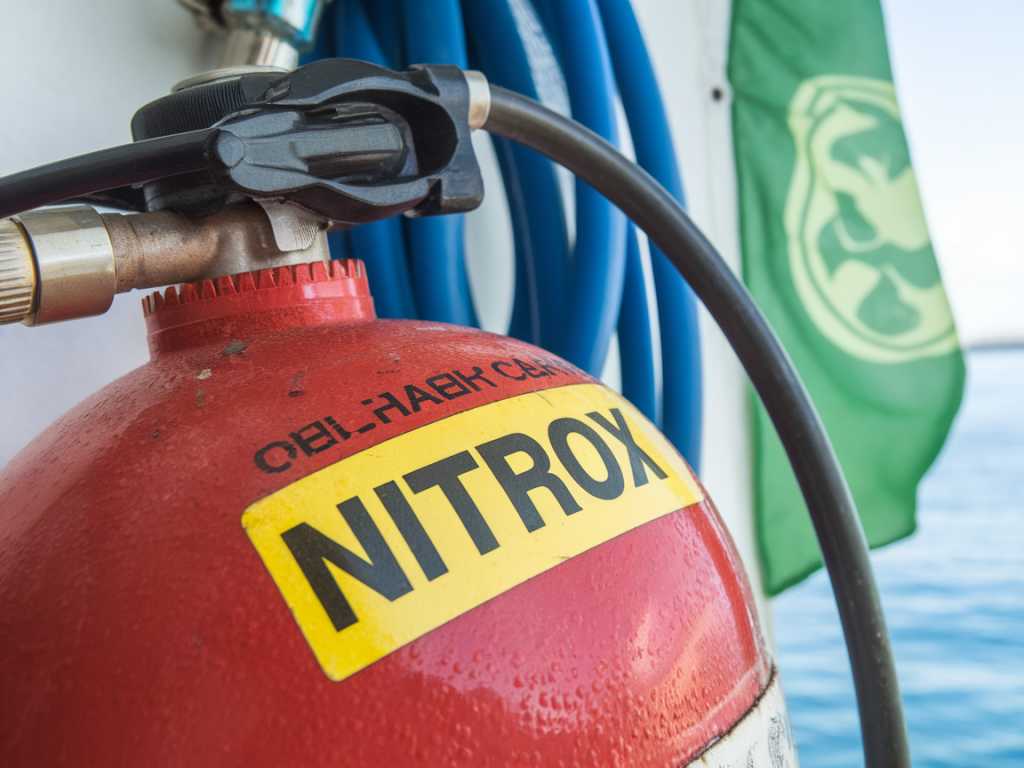
  • Do you provide a nitrox label/sticker and include the O2% and fill pressure on it?
  • I also ask who signs off the analysis. I like seeing the shop technician initial the label and write the O2% and pressure — this is important if anyone questions the fill later.

    Paperwork and checks — what I never skip

    There are a few documents and checks that will save you headaches. When I rent a nitrox cylinder I make sure the following are completed and that I keep a photo of each document on my phone:

  • Certification and medical declaration: If you’re using nitrox recreationally you must be oxygen-aware — most shops will ask to see your Open Water or Advanced certificate and your nitrox course card if you’ve taken one. If you haven’t taken a nitrox specialty, expect the shop to give a brief oxygen briefing (limits on depth, maximum O2% for your dive profile). They will also likely require a completed medical questionnaire and a signed liability waiver.
  • Tank inspection and hydrostatic test stickers: Check the cylinder for a current visual inspection sticker and the hydrostatic test date. If the visual inspection (VIP) or hydro is out of date, don’t accept the tank.
  • Analyzer reading and label: The shop should analyze the tank in front of you and attach a label with O2% and pressure and the technician’s initials and time. If they won’t show you the analyzer or won’t let you see the label details — walk away.
  • Rental contract details: Confirm rental period, replacement costs (for lost/damaged valve or cylinder), and required deposit. Take a photo of the signed contract for your records.
  • Typical extra costs — what to budget for

    Here’s how costs tend to break down. Prices vary by shop and season, but these are realistic figures I see regularly in Lanzarote.

    Service Typical cost (EUR) Notes
    Nitrox fill (per tank) €8–€20 Depends on oxygen cost and shop policy; higher if analyzer fee included
    Analyzer use / oxygen analysis fee €0–€5 Some shops include in fill price; others charge separately
    Cylinder rental (if you don’t bring your own) €5–€15/day May be included with guided dives; check if deposit required
    Regulator rental €10–€20/day Only if you need a dedicated 2nd stage compatible with high-oxygen service
    Deposit €50–€200 Refundable if equipment returned undamaged
    O-ring replacement / valve damage €5–€50+ Small repairs usually charged; major valve damage replacement costly

    From my bookings I tend to budget around €15–€30 extra per nitrox tank compared with an air fill once you add rental and potential analyzer fees. If you plan multiple dives a day or bring your own kit, the per-dive cost drops.

    Technical points and safety I always check

    When oxygen is above 22% there are specific precautions. I watch for these details and ask the shop to confirm them:

  • Are the cylinders serviced for oxygen service (cleaned and O2-compatible grease-free valves)?
  • Are the regulators being used specifically for nitrox or oxygen service, or are they rented across mixed use? (Prefer dedicated or freshly serviced regs.)
  • Does the shop label the tank with maximum operating depth based on the O2%? (For example, 32% nitrox has a MOD of around 33m for a 1.4 atm PO2.)
  • Is there clear instruction on maximum PO2 to use for planned dives and surface intervals?
  • I also carry a small personal nitrox analyzer probe if I’m depending on a specific blend for conservative no-deco limits. It’s not necessary for every diver, but it has saved me once when the shop’s analyzer seemed unstable.

    Practical tips from my own trips

    Some final practical habits I use that save time and avoid surprises:

  • Book nitrox fills in advance if you’re visiting during peak season — shops may run out of oxygen cylinders or have scheduled maintenance.
  • If you’re renting a cylinder, ask for a DIN valve if you use DIN regulators; bringing your own DIN/INT adapter avoids on-the-spot purchases.
  • Take photos of analyzer readouts, the tank label, and the signed contract. They’re useful if there’s a later discrepancy with the mix or a damage claim.
  • If you plan technical or deeper nitrox use, discuss your dive plan with the shop technician. Good shops will advise on appropriate mixes and max MODs based on your planned depths.
  • Hiring nitrox near Puerto del Carmen is straightforward when you choose a professional shop, insist on seeing the analyzer reading and inspection stickers, and budget for a few small extras. With those checks done, you can focus on the interesting part — enjoying longer bottom times and more relaxed surface intervals around Lanzarote’s volcanic reefs.
    You should also check the following news:

    How to choose the right reef-safe sunscreen for lanzarote snorkeling that won’t fog masks or wash out reef colors
    Snorkeling

    How to choose the right reef-safe sunscreen for lanzarote snorkeling that won’t fog masks or wash out reef colors

    Why reef-safe sunscreen matters for Lanzarote snorkelingWhen I’m planning a snorkel off Papagayo...