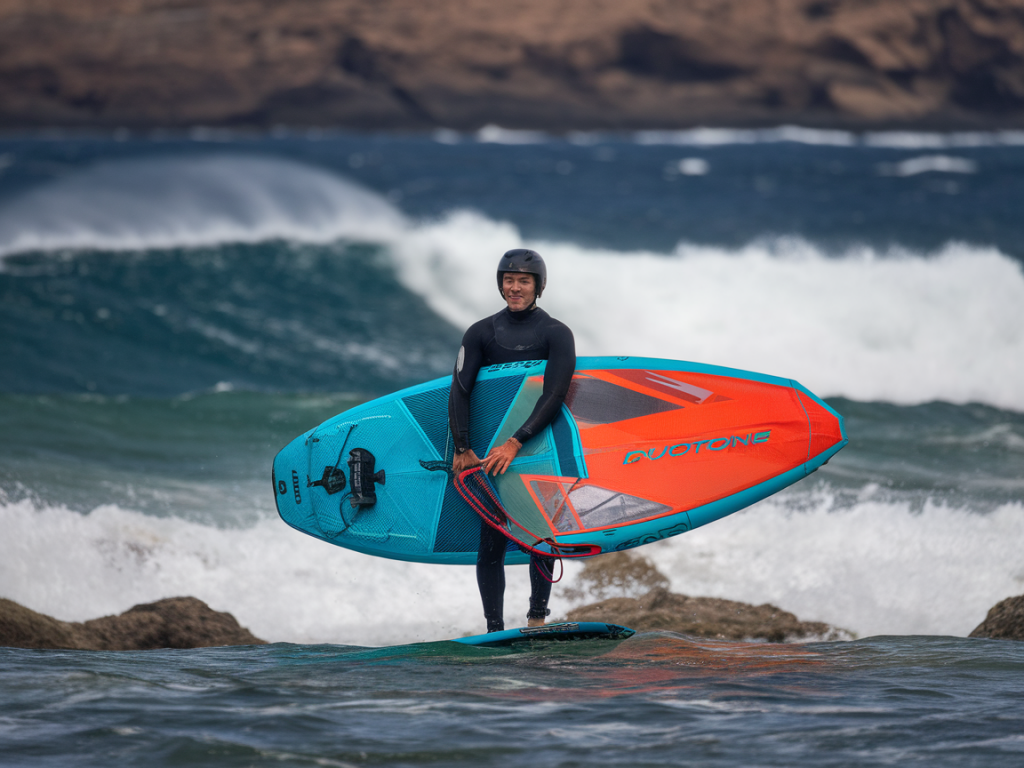
Windsurfing

Step-by-step windsurfing prep for Famara cross-shore runs using Fanatic or Duotone gear

Step-by-step windsurfing prep for Famara cross-shore runs using Fanatic or Duotone gear

Famara is one of those spots that will spoil you: reliable cross-shore winds, long sandy beach launches and plenty of room to build speed. If you want to get the most from a Famara cross-shore run — safely and smoothly — preparation makes all the difference. Below I share my step-by-step routine for prepping gear, body and mindset, specifically when I'm using Fanatic or Duotone kit. These are the boards and sails I most often test and teach with here on Lanzarote, so I’ll give practical settings, checks and tips that work in real conditions.

Why specific prep matters for Famara cross-shore runs

Famara’s wind can range from gentle to gusty, and the sea state changes along the run. Cross-shore means you’re often dealing with onshore wind components near the shore and cleaner cross-shore further out. That mix makes equipment setup, launch planning and safety checks essential. A small tuning change or a rushed launch can mean a blown plan — or worse, an avoidable swim.

Pre-session checklist (what I always do before leaving)

  • Check the wind forecast (Windfinder, Windy) for direction and gusts — I look for consistent cross-shore 15–25 knots for classic Famara runs.
  • Check tides and swell — lower spring tides can expose sandbars; mid-tide often gives the safest launch corridor.
  • Inspect gear: board, mastfoot, mast, extension, boom, harness lines, fin(s), footstraps and leash.
  • Pack a small toolkit: pump (with gauge), spanner, duct tape, spare pins/cleats and a patch kit for bladders or board dings.
  • Download offline map or mark waypoints: launch spot, recognizable shore markers and the safest return point.
  • Choosing the board and sail — Fanatic vs Duotone setup tips

    Both Fanatic and Duotone make excellent gear for Famara; choice often comes down to ride style and conditions.

  • When it’s gusty and the run is long I favour a Fanatic Falcon Freeride or Falcon Air (if I want a forgiving, stable ride). Fanatic boards have a very predictable rail and great early planing — helpful when you need to accelerate out of gusty lulls.
  • For high-speed, tight-carving runs I’ll grab a Fanatic Stubby or a race-inspired board, but only when waves and wind are steady.
  • Duotone sails (e.g. Super Hero, Unit, or the freeride Echo) provide crisp power delivery. The Super Hero is my go-to when I want a tight, controlled feel and efficient upwind drive.
  • If I expect sustained 20+ knots I’ll rig a smaller Duotone sail with a shorter mast extension and stiffer boom to maintain control through the gusts.
  • Rigging and trim — what I set on the beach

    Proper rigging shortens the learning curve on the water. I use these baseline settings and then fine-tune when I step on the board.

    Item Starting setting Notes
    Sail Base downhaul per manufacturer stamp Windy/powerful days: +1–2cm more downhaul. Lighter days: -1cm for more twist.
    Mast extension Set to recommended for sail size Shorter extension = less power, more control. I shorten for gusty cross-shore.
    Boom Shoulder to wrist with arm extended For duotone units, set closer if you want tighter leech tension.
    Footstrap positions Rear strap slightly forward for freeride; back for top speed I mark my preferred holes with a small bit of duct tape on the board.
    Fin Main fin: mid-to-rear position Move slightly aft for stability at speed; forward for tighter turning.

    Personal warm-up and mindset

    I invest 10–15 minutes on the sand doing dynamic stretches — hip openers, shoulder rotations and a few lunges. My lower back and hips need to be ready for the stance and the torque. I also visualize the run: launch, first gybe point, potential gusts and where I’ll decide to cut out if sea state gets choppy.

  • Hydration and small snack: a banana or energy bar 30–45 minutes before heading out.
  • Sun and eye protection: polarized sunglasses during setup, then goggles or lens with UV for longer sessions.
  • Mental checklist: can I self-rescue if I lose the rig? Do I know where the nearest beach patrol/dive centre is?
  • Launch technique for cross-shore conditions

    Famara often requires a downhill beach run or a cautious water start. I prefer a waterstart when wind is steady, but if it’s gusty I’ll use a controlled upwind beach launch.

  • Position the board slightly upwind of your body so the wind pushes the sail full but not overpowered.
  • Pop the front footstraps on first, then get the back foot in as you build speed.
  • Look forward, not at the sail. I find that keeping my head up helps me read gusts and steer better.
  • On-the-run tuning and tips

    Once I’m planing and comfortable, I perform small adjustments:

  • Too much power/gusts: ease the downhaul slightly or move the back foot a few cm forward to spill power.
  • Losing drive: trim the sail in, move weight back to engage the fin and plane earlier.
  • If I’m catching waves and want to ride the face, I widen my stance and shift weight to the rear foot to keep the nose from digging.
  • Safety and emergency considerations

    I never underestimate the cross-shore risks. I always carry a leash that’s appropriate for my style (I use a short coiled leash for freeride and a longer straight leash for long-distance runs). I also wear a harness with a quick-release and keep a small safety whistle on a cord.

  • Tell someone on shore your planned route and estimated return time.
  • If conditions deteriorate, head toward the nearest safe return point rather than fighting backwind directly into the shore.
  • Practice quick waterstarts and rig recovery drills nearshore so they’re second nature when you need them.
  • Packing checklist for a Famara session

  • Board (Fanatic/Duotone) with fin and footstraps
  • Sail, mast sections, extension, boom
  • Pump with gauge, leash, harness and harness lines
  • Wetsuit (3/2 or 4/3 depending on season), booties for rocky entry
  • Spare parts and basic toolkit
  • Water, snack, sun protection, whistle
  • Famara rewards sensible preparation: the right rigging, a clear plan and a calm mindset let you focus on the surf and the long, satisfying runs. Whether you’re on a forgiving Fanatic freeride board or a responsive Duotone setup, these steps will help you get more time on the plane, ride safer and push your speed and carving with confidence.

    You should also check the following news:

    How to safely snorkel the underwater lava tunnels at Los Hervideros (route, timing and kit)
    Snorkeling

    How to safely snorkel the underwater lava tunnels at Los Hervideros (route, timing and kit)

    Los Hervideros is one of those places that looks like a moonscape from the shore and a dramatic...