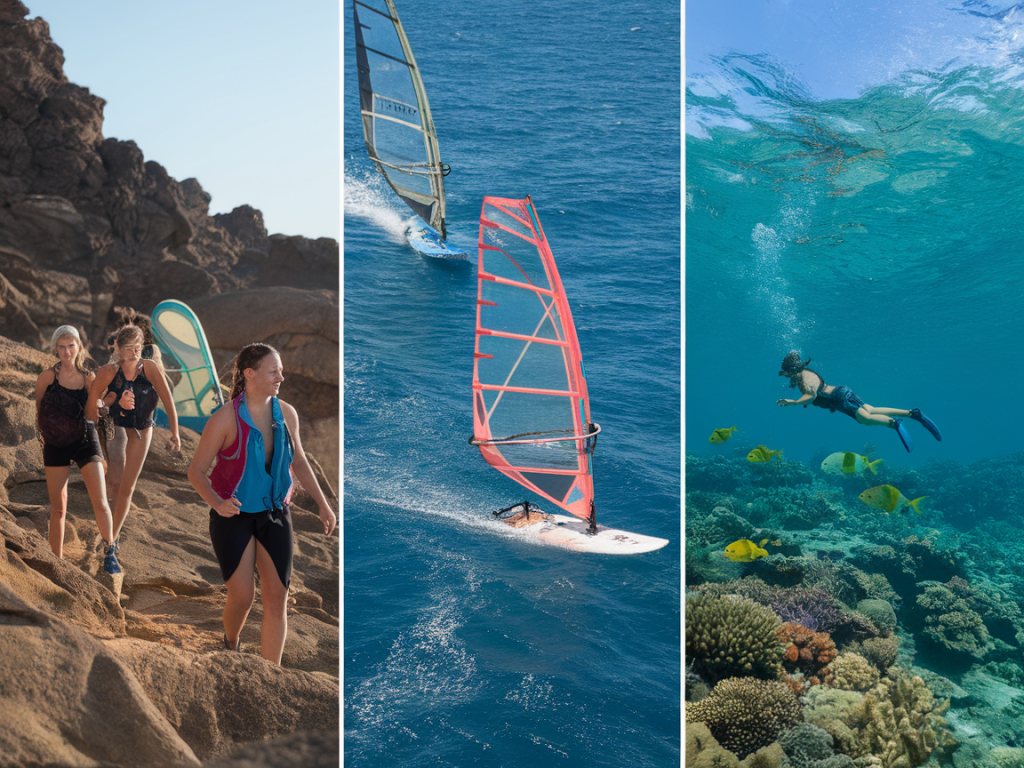
Planning a day that squeezes a morning hike, an afternoon windsurf session and an evening reef snorkel around Lanzarote is one of my favourite ways to experience the island — you get volcanic landscapes, adrenaline and calm underwater life all in a single 24-hour loop. It takes a bit of logistics, but with a simple plan you can move smoothly between activities and come away exhausted (in the best way) rather than frantic. Below I share how I organise these days, what I pack, timing and safety considerations that have saved me more than once.
Picking the loop: which hike, which beach for wind and snorkel
I always design the day around prevailing wind and tide forecasts. A typical, reliable combo I use is:
- Morning hike: Caldera Blanca or a coastal stretch near Famara (easy-to-moderate, great views).
- Afternoon windsurf: Playa de Famara (winds are more consistent in the afternoon, thermals build up).
- Evening snorkel: Papagayo coves (protected waters and clean reefs, best at low wind and before sunset).
Why this order? I prefer hiking before water sports because trails are cooler and there’s less sand/seaweed on my gear. Winds on Lanzarote typically pick up midday, which favours an afternoon windsurf. Papagayo is sheltered enough for a calm evening snorkel and the light at golden hour is excellent for photos.
Timing: how I slot activities into the day
Here’s a timeline I use as a template. Tailor it to local sunrise/sunset and your fitness/skill level.
- 07:30 – 10:00: Hike (2–3 hours including breaks and photography)
- 10:00 – 11:30: Drive, shower, quick lunch and change
- 12:00 – 16:30: Windsurf session (2–4 hours on the water, with breaks)
- 16:30 – 17:30: Freshen up, drive to snorkel site
- 17:30 – 19:00: Snorkel and tide-window watch (finish before dark)
Allow buffer time for traffic, equipment pickup/return, and the unexpected. On weekends Famara parking can fill up, and some Papagayo coves are busy in summer — arriving early or late helps.
Transport and kit logistics
I usually travel with a small hatchback or SUV for boot space. If you don’t have a car, local operators can often arrange equipment transfers or guided combinations, but having your own vehicle gives you flexibility.
How I manage kit:
- Pack the largest, wettest kit (windsurf board, wetsuit, harness) in the car first; keep snorkel gear and light hiking items in soft bags.
- Use a big dry bag for gear that must stay dry (phone, camera, extra layers).
- If you rent windsurf equipment, confirm the return window. Many shops let you leave sanded gear to dry in a dedicated area.
If carrying a windsurf board and a snorkel set in one trip feels heavy, I drop my hiking pack in the car between the hike and the water sessions. A small lockbox or leaving items locked in the car works fine if you use a hidden compartment or trunk.
Gear essentials and my recommended brands
I pack for performance and comfort. Here’s my standard kit list for a multi-sport day:
- Hiking: light daypack, water (1.5–2L), hat, windproof layer, sunglasses, snacks, map or offline GPX.
- Windsurfing: 4/5/6 sail options depending on wind, board matched to conditions, harness, booties, neoprene top or full suit in spring/autumn. I often use NeilPryde sails and a Starboard or Tabou board when renting; for harnesses I like Mystic.
- Snorkel: mask, snorkel, 3mm short or full wetsuit (sea temps vary 18–22°C), reef-safe sunscreen, mesh bag, dive skin if you prefer. I use Mares masks and a GoPro in a waterproof housing for photos.
Small extras that make long days nicer: a thermos with hot tea/coffee, electrolyte tablets, pocket knife, small first-aid kit, compact towel, and a headlamp if you might finish at dusk.
Tides, wind and currents — the planner’s headache (but manageable)
Key rule: align your water sessions with the safest tide/wind windows. For snorkelling reefs I aim for slack tide or an incoming tide that keeps visibility good and reduces surge. Papagayo is best on calm days or slight onshore breeze; avoid snorkelling there during strong onshore wind that churns the water.
For windsurfing at Famara, check the wind forecast (predictwind, Windfinder, local webcams). Famara tends to get stronger, reliable winds in the afternoon due to thermal effects. If the wind is forecasted offshore and gusty, consider moving to an alternative beach or postpone.
Always check local current patterns and ask locals or the surf school about any seasonal hazards. I’ve learned to respect seemingly calm shorelines that hide strong rip currents.
Safety and emergency basics
I treat the day as three separate activities with their own hazards:
- Hiking: tell someone your route, take a map and sufficient water, and wear sun protection.
- Windsurfing: wear a leash or use an impact vest if you’re riding waves, carry a VHF or phone in a waterproof case, and never go out alone if conditions are marginal.
- Snorkelling: buddy up or let someone know your plan, carry a surface marker buoy if exploring deeper reef edges, and don’t touch or stand on the reef.
I also keep a small, bright emergency blanket in the car and a portable power bank for phones. If you’re not confident in rescue techniques, consider a guided combo — many local centres run multi-activity days with transport and kit covered.
Packing table — my practical checklist
| Item | Why I bring it |
|---|---|
| Daypack | Carry water, snacks, sunscreen and first-aid |
| Dry bag (20–30L) | Protect electronics and change of clothes |
| Wetsuit (3mm) & booties | Comfort for snorkel and spring/autumn windsurfing |
| Windsurf gear (or rental voucher) | Main activity gear; pack sail options |
| Mask, snorkel, fins | Own fit is always better; fins in mesh bag |
| Phone in waterproof case + power bank | Navigation, photos and emergency contact |
| Reef-safe sunscreen & lip balm | Protect skin and marine life |
| Light fleece/windproof | Warmth after water sessions |
Food, hydration and energy management
Fueling is underrated. I eat a substantial breakfast before the hike — porridge or eggs and fruit — then a light, carbohydrate-rich lunch between the hike and windsurfing (sandwich, wrap, or energy bars). Bring salty snacks for after windsurfing; you will sweat a lot. Hydration is critical: I sip electrolytes throughout the day.
Photography tips for a varied day
If you plan to shoot both landscapes and underwater, a small, versatile kit works best: a compact mirrorless with a wide-angle lens for landscapes and a GoPro for the reef. Keep cameras in separate dry bags and rinse housings in freshwater after the day. Golden hour at Papagayo makes the evening snorkel particularly photogenic.
Ready to try this? Start with a less ambitious loop — a short coastal hike, an hour or two on the water and a quick snorkel — then expand as you learn the timings and how your body feels across a full day of multi-sport fun. If you’d like, tell me which season or exact spots you’re planning and I’ll suggest a tailored timeline and kit list.