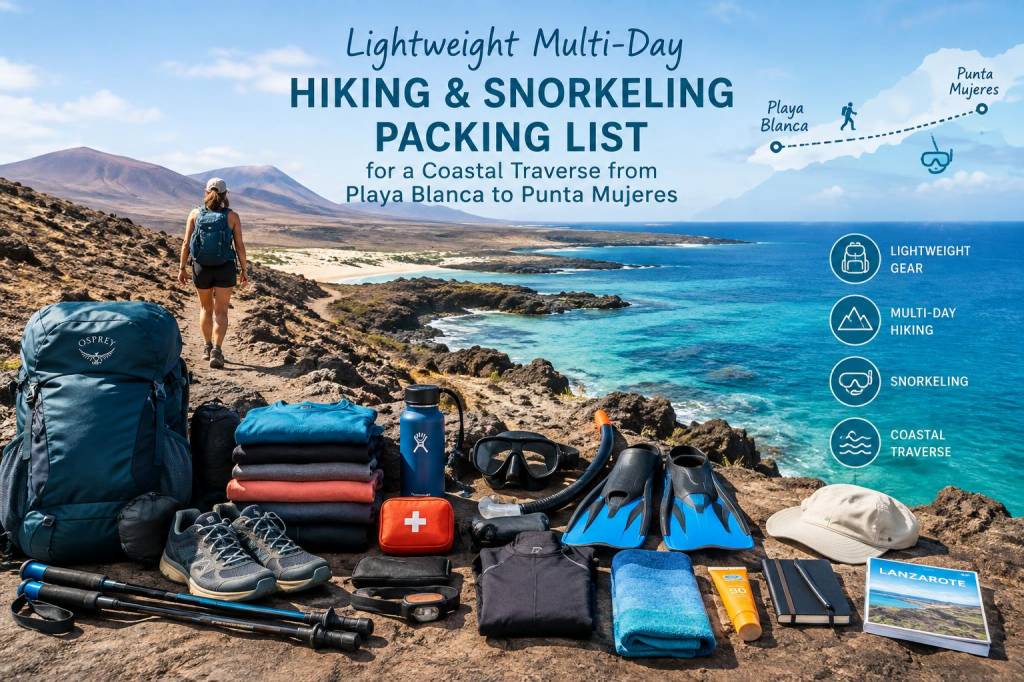
I recently completed a multi-day coastal traverse from Playa Blanca to Punta Mujeres and figured out a compact, lightweight kit that balances comfort, safety and good snorkeling. If you want to hike Lanzarote’s coast over several days and keep your pack small while still enjoying regular swims and underwater time, here’s the exact gear I brought, what I wished I’d changed, and practical tips for route planning, water, shelter and safety.
Why pack light for a coastal traverse?
Walking along Lanzarote’s coast means exposed volcanic landscapes, strong trade winds and frequent opportunities to jump into clear water. A heavy pack quickly ruins the fun — you walk slower, overheat and are less inclined to stop for snorkels or photo breaks. Packing light makes the traverse more enjoyable and gives you flexibility to detour, explore tide pools and set up camp in protected spots.
Basics of the route and logistics
The coast from Playa Blanca to Punta Mujeres is roughly 90–120 km depending on detours. I split it into 4–6 days: manageable stages of 15–30 km with time to snorkel and rest. Public transport is available at both ends (buses from Playa Blanca and Arrecife or Teguise to northern towns) so you can plan one-way logistics. I recommend booking a hotel or campsite a day before your start in Playa Blanca to check gear and a pick-up or return ticket in advance for the end point.
Permissions and camping: wild camping on Lanzarote is generally discouraged and sometimes forbidden in protected zones. I used a mix of low-cost guesthouses, a wild but discreet bivy in low-visibility spots, and one small campsite. If you’re unsure about a spot, ask locally — many small hostales will let you leave a pack for a day if you walk out from town and return.
Packing philosophy
I aim for a base weight under 6–7 kg (excluding food and water), prioritising multi-use items, ultralight shelter and a snorkel set that’s compact. Think fast-drying, sun-protection, and gear that’s easily accessible — you’ll want your mask and fins for frequent quick swims.
Essential gear (what I carried)
- Backpack: 30–40 L ultralight pack with a good hipbelt and compression straps (I used an Osprey Levity 40 — supportive but light).
- Shelter: 1-person bivy or ultralight tarp + trekking poles (Zpacks-style or MLD tarp if you prefer). I carried a 1-person tent (about 900 g) for wind protection on exposed beaches.
- Sleep system: Lightweight 3-season sleeping bag or quilt (down, 300–400 g) + inflatable sleeping pad (therm-a-rest NeoAir is warm and light).
- Clothing: 1 set of merino base layers (top + leggings), 1 lightweight windproof/waterproof shell (e.g., Montane or Patagonia Houdini), 1 pair of convertible hiking pants/shorts, 2 quick-dry shirts (one long sleeve for sun), 3 pairs of socks, underwear, sun hat. I wore a thin buff for sun and dust.
- Footwear: Comfortable trail shoes or light hiking boots with good grip for volcanic rock (I prefer low-cut trail shoes like Salomon XA or Altra Lone Peak for grip and weight). Bring lightweight sandals for beach stops and snorkeling exit points.
- Snorkeling kit: Travel mask with purge, short snorkel, reef-safe sunscreen, 3 mm shorty wetsuit or 1.5–2 mm neoprene top (water is cool in spring/autumn), and compact fins. I use foldable travel fins (Cressi Light or Mares Avanti Quattro Compact) — they save space and weight.
- Cooking & water: Small canister or liquid fuel stove (MSR PocketRocket) + lightweight pot, spork, and a 1 L water bottle + 2–3 L collapsible bladder. Water availability is limited; plan water caches in towns and filter/treatment (Sawyer Mini or Steripen) if you want to refill from doubtful sources.
- Navigation & communication: Map (printed map or guide), phone with offline maps (download route in Maps.me or Gaia), power bank (10–20 000 mAh), headlamp, and a small solar charger if you prefer very low weight and long trips.
- Safety & first aid: Lightweight first aid kit (plasters, blister care, painkillers, antiseptic), whistle, emergency blanket, multi-tool, and a small repair kit for gear. I also pack a handheld VHF or a PLB if you plan long cliff stretches near the sea — mobile coverage can be patchy.
- Other: Lightweight towel, small dry bag for electronics, ziplock bags, biodegradable soap, toothbrush, and minimal toiletries.
Checklist table (quick view)
| Pack | 30–40 L ultralight pack |
| Shelter | 1p tent/bivy or tarp + poles |
| Sleep | Down quilt/bag + NeoAir mat |
| Clothes | Merino layers, shell, shorts/pants, sun shirt |
| Shoes | Trail shoes + sandals |
| Snorkel kit | Mask, snorkel, compact fins, short wetsuit |
| Cooking | PocketRocket, pot, 1 L bottle + bladder |
| Navigation | Phone with offline map, map, headlamp |
| Safety | First aid, PLB/whistle, multi-tool |
Food and water planning
I carried dehydrated dinners and lightweight breakfasts (oats, powdered milk), plus snacks like nuts, energy bars and tuna pouches. For a 4–6 day traverse I planned town resupplies every 1–2 days where possible. Water is the heavier item: aim to carry 1–2 L during walking, topping up to 2–3 L when you know you’ll be out for long exposed stretches. If you want to be fully independent, learn to use your water filter reliably — some island sources contain salts or brackish water that need treatment.
Snorkeling tips for a multi-day hike
- Keep your mask and snorkel in a dry bag on the top of the pack for quick access.
- Wear a shorty or neoprene top if you plan long swims — Atlantic conditions can be cooler and choppy.
- Choose compact fins you can wear while exiting onto rocky coastlines — avoid full-foot fins that slip off.
- Check tide times and swell forecasts before entering coves. Some bays have strong currents or surf zones that make snorkeling risky.
- Use a bright surface marker buoy if you’re snorkeling alone in open water; it increases visibility for boats and fellow hikers.
Weather, wind and tide considerations
Lanzarote’s trade winds are predictable but can be strong, especially on the north coast near Famara and Punta Mujeres. Plan hiking stages with wind in mind — exposed ridges are tougher and slower. I timed long ocean swims for early morning when winds are typically lighter and seas calmer. Always check local forecasts (AEMET Spain, Windy) and ask locals about current conditions — fishermen and dive centres give honest, practical advice.
What I changed after the trip
- I swapped my heavier tent for an ultralight tarp-based shelter on subsequent trips — the weight saved made longer days easier.
- I now carry a smaller 500 ml pump flask and top up more frequently from town to reduce carried water weight.
- I added a small surface marker buoy after a windy snorkel where visibility was low — it’s light and gave me peace of mind.
If you want, I can send a downloadable checklist formatted for printing (PDF) with item-by-item weights and a sample 5-day itinerary with water/resupply points. I’m also happy to recommend exact models I used and where to rent or buy locally on Lanzarote.