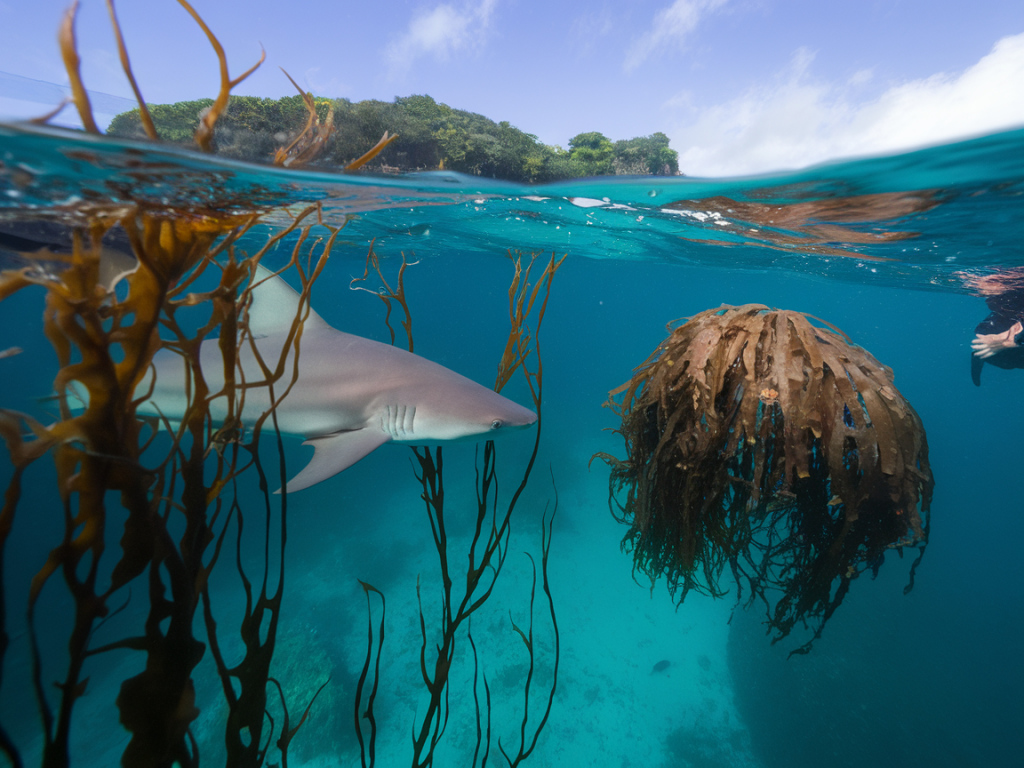
I get asked a lot where to see angel sharks and sargos around Lanzarote — two very different encounters that I still find quietly thrilling every time. Angel sharks (Squatina spp.) are secretive, bottom-dwelling predators that lie camouflaged on sandy flats, while sargos (commonly Diplodus sargus and similar sea bream) are bold, curious reef fish that often come right up to snorkelers. Both make fantastic wildlife experiences if you know where and when to look, and how to approach them respectfully.
Why these species are worth the effort
Angel sharks are rare around many parts of their historic range, and spotting one is a special moment — you’ll often see only the outline of a flattened body and the eyes and spiracles before the rest of the fish slowly slides away. Sargos are the opposite: abundant, confident and great for photography because they tolerate close distances and have expressive faces. Together they give you a picture of two sides of Lanzarote’s nearshore ecosystem: the cryptic predators on the sand and the energetic reef communities around the rocks.
Best spots around the island
Below are the places where I’ve either seen angel sharks myself or where local guides and fishers regularly report sightings, and where sargos are reliably present. Conditions change seasonally, so I note the best months and what to expect.
| Spot | Species | Best months | Notes |
|---|---|---|---|
| Papagayo (Playa Blanca) | Angel shark, sargos | May–Oct | Clear water, sandy flats off the small coves; boat access speeds locating deeper sand patches. |
| Playa Chica (Puerto del Carmen) | Sargos | All year (best Apr–Oct) | Rocky reefs and underwater walls; easy shore entry and great for close-up photos. |
| El Golfo / Los Hervideros | Sargos, occasional angel sightings nearby | All year | Reef edges and boulder fields; currents can be present—check local conditions. |
| Famara (north coast) — coastal runs | Sargos | Apr–Sep | Long sandy stretches with rock outcrops. Best on calm days; strong winds can mean choppy water. |
| Playa Honda & Arrecife shallow areas | Sargos | All year | Urban snorkelling. Less scenic but reliable for sargos and juvenile communities. |
| Punta Mujeres & Jablillo | Sargos, occasional angel shark reports | May–Oct | North-east coast; tide awareness necessary due to currents. |
When to go — season, time of day and tides
For sargos, you can snorkel year-round but I prefer late spring to early autumn. Water is warmer, visibility typically better, and sargos are more active in shallow water. For angel sharks, the window narrows: late spring through early autumn tends to offer the best chances because sand flats warm up and fishing pressure is lower in some spots. That said, sightings are always sporadic and often depend on who’s been looking recently.
Time of day matters. I like early morning sessions for two reasons: the water is often calm, and there are fewer boats and anglers around. Sargos feed throughout the day but are less wary in the morning if there’s less human activity. For angel sharks, low light — dawn or dusk — can sometimes increase your chance of seeing them when they’re more active on the sand, but that comes with lower visibility and more caution required.
Tides influence where the sand and boulder habitats are accessible. A moderate falling tide can expose sand flats while still keeping enough water for comfortable snorkelling; avoid strong ebb currents on exposed coastlines. Ask a local dive centre for the best tide for a specific cove — they’re an excellent resource.
How to find angel sharks — read the habitat
Angel sharks are ambush predators that favour gentle sloping sand plains often adjacent to rocky reefs or seagrass patches. When I’m looking for them I search the transition between sand and rock, keeping my eyes on the bottom and watching for the telltale flat outline or the two eyes/spiracles peeking up from the sand.
Approach slowly and low in the water column. Avoid sudden movements and never touch the bottom. Angel sharks are harmless to snorkelers if left alone — their camouflage and surprise strategy means they’ll usually slip away rather than confront you. If you see one, hold still, relax your breathing and let others in your group enjoy the moment without crowding.
How to approach sargos and maximise interaction
Sargos are bold and curious. I often get better encounters by staying horizontal, letting them come to me rather than chasing them. They’re attracted to small crustaceans and limpets on rocks, so stationary observers will often be joined by a handful of fish within minutes.
- Keep your hands tucked away and avoid feeding fish — it disrupts natural behaviour and can be illegal.
- Wear dull-coloured fins if you want them to approach; flashy kit can spook them.
- Use a float or surface marker if you plan to stay in one place; it helps boats spot you and reduces the need to fin hard against current.
Gear and practical tips
Here’s what I bring on most snorkels where I hope to spot angel sharks or hang out with sargos:
- Mask & snorkel: a low-volume mask (Cressi, Mares or TUSA are reliable) and a comfortable dry-top snorkel.
- Fins: long-bladed snap fins for efficient propulsion if you’ll cover distance; split fins for less leg fatigue if your dives are calmer.
- Exposure protection: a 3/2mm shorty wetsuit in summer months, 5mm full suit in winter — Lanzarote’s Atlantic can be chillier than it looks.
- Boots and gloves: thin neoprene boots if you’re entering over lava or rock; gloves only if you need protection for shore entries (don’t touch marine life).
- Underwater camera: small compact or action camera in a housing (GoPro with red filter for deeper shots). Patience gives better results than chasing shots.
- Safety kit: surface marker buoy, whistle, and a small first-aid kit in your bag.
Respect and conservation — how to behave
Observing these animals comes with responsibility. Angel sharks are vulnerable in many regions, and local populations must be treated with care. My rules on every snorkel are simple:
- Never touch or attempt to move an animal.
- Keep a respectful distance — for angel sharks that means several metres; for sargos you can let them approach you.
- Don’t feed fish or alter their behaviour.
- Use reef-safe sunscreen or cover up with a suit to avoid chemical damage to habitats.
If you’re lucky enough to see an angel shark, report the sighting to local conservation groups or a dive centre — sightings data help researchers monitor populations. At Scubalanzarote Co we link to local initiatives and often coordinate with centres that collect citizen science reports.
Guided trips vs solo snorkelling
I often recommend a guided trip if you’re targeting angel sharks specifically. Local guides have up-to-the-minute knowledge on recent sightings, safe entry points and how to work with currents. For sargos, a self-guided snorkel at a sheltered bay is perfectly fine if you follow basic safety rules.
When booking a guide, ask whether the operator follows low-impact wildlife watching protocols. A good guide will prioritise the animal’s wellbeing over getting a close encounter for a photo.
My favourite moments
One image that sticks with me is a half-second when a small angel shark lazily folded into the sand as I hovered above, its mottled back vanishing like a living shadow. Another is a playful shoal of sargos weaving through my legs around a rocky outcrop, bold enough to inspect the camera like little silver investigators. Those two very different experiences capture why I keep returning with my mask and camera: the island’s shores always have stories to tell if you slow down and listen.
Want practical route notes for any of the spots above or a local contact for a guided session? Send a note through the contact page on Scubalanzarote Co (https://www.scubalanzarote.co.uk) and I’ll point you to the best local operators and the tidal windows I use for planning.