I run guided dives around Lanzarote almost every week, and over the years I’ve developed a compact, conservation-first briefing I use with clients before every trip. The goal is simple: keep divers safe, reduce our footprint on fragile volcanic reefs and marine life, and give people a better experience by encouraging curiosity without disturbance. Below I share the briefing script I use, practical tips, a checklist you can copy into your own pre-dive routine, and examples for common situations we face here in the Canary Islands.
Why a conservation-minded briefing matters
On a busy dive day it's tempting to skip the nuance and go straight to logistics. But small behavioural changes by every diver multiply quickly. A diver who understands why not to chase a lobster, how to control buoyancy near sea fans, or where to position their torch at night will have a safer, more rewarding dive — and the site will stay healthy for everyone else. I also find that framing rules with biology (what lives here and why it matters) increases compliance and curiosity.
My standard briefing structure
I keep the briefing short (5–8 minutes) and modular. I start with immediate safety items, then layer in conservation points tied to each phase of the outing: boat, entry, in-water behaviour, photography, ascent and surface. Here’s the exact flow I use on most dives:
Boat and shore brief — setting the tone
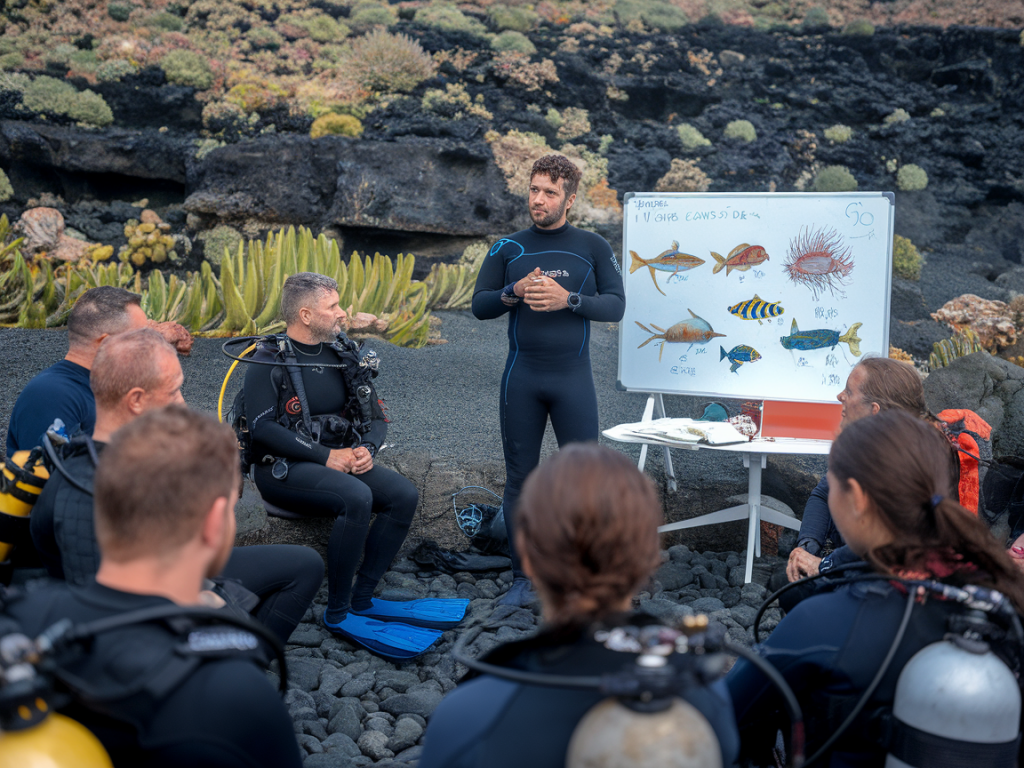
Before we even gear up I do a short talk on the boat or at the shore that sets conservation expectations. I say something like:
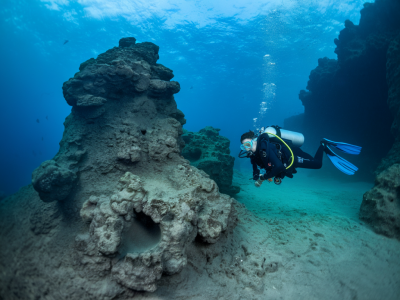
"Today’s site is a mix of lava formations and dense Posidonia meadows. Those meadows are breeding and nursery areas — they look like grass but are living habitat. Please avoid kicking around them or stepping on them. We’ll anchor in a sandy patch; keep fins and equipment controlled when entering and exiting from the boat to avoid contact with reef or plants."
Practical points I cover here:
In-water behaviour: what I say and why
Once we’re in the water I remind divers of three simple rules I repeat on every dive: no touching, no chasing, no sitting. I explain briefly what each means in local context.
I also give specific instructions for local hotspots:
Buoyancy drill I use on the surface
Poor buoyancy is the number one threat to reefs. I reserve time before every dive for a two-minute surface weight/trim check and a short hovering drill at 3–5m for those who want it. The script:
This drill saves lives and coral.
Photography: respectful camera use
Many divers come with cameras, and responsible photography is a discussion I always raise.
Dealing with wildlife encounters
I brief on typical wildlife behaviour and recommended responses:
Anchoring, mooring and boat etiquette
I insist we use mooring buoys whenever possible. If anchoring is necessary I coordinate with the skipper to anchor in sand, away from meadows and reef. I brief divers to avoid touching the anchor chain or moving the buoy line. On the surface I remind everyone to hold on to the surface marker buoy (SMB) properly — avoid dropping it through seagrass beds.
Enforcement: how I keep things respectful without policing
Enforcement is more about culture than rules. I model behaviour first: slow movement, careful entry, and no touching. I also use positive reinforcement — praise and small corrections work better than scolding. For repeat infringements I use a private, calm approach: stop the activity, bring the diver aside and explain the ecological impact. If a behaviour continues after correction, I’ll remove the diver from the dive. Protecting the site comes first.
Simple conservation checklist you can use
| Pre-dive | Weights checked, conservative weighting, gear secured, mooring plan reviewed |
| Entry | Controlled entry—no drag, check fins on descent, avoid seagrass |
| In-water | No touch, no chase, hover instead of sit, slow approach to animals |
| Photography | Minimise flash, no touching animals, stabilise using your body — not the reef |
| Ascent/surface | Slow ascent, avoid rapid SMB deployment through Posidonia, collect any stray rubbish |
Training and follow-up
I always offer a short post-dive debrief to discuss what we saw and where we can improve. For clients who want more I run compact conservation workshops (30–60 minutes) covering Posidonia ecology, reef recovery, and low-impact photography. I also encourage divers to participate in citizen science projects — recording sightings, collecting photo data for iNaturalist, or joining local beach cleans is a great next step.
If you’d like a printable version of this briefing or a translated version for your dive centre team, I can adapt it. When we all dive with intention, we protect what we love and ensure Lanzarote’s underwater world stays healthy for future visits.