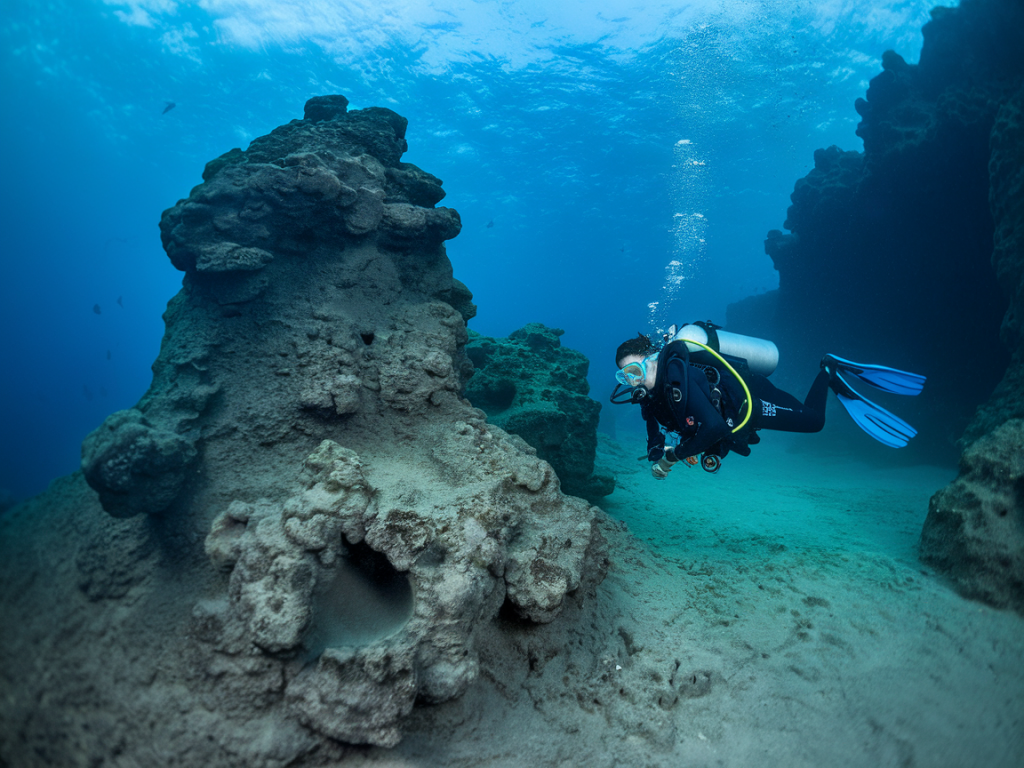
I still remember the first time I breathed nitrox on a dive around Lanzarote — a calm wall off Los Colorados, the sun slicing through the water column, and a feeling that I could stay down a little longer without the usual edge of fatigue. Since then I’ve used enriched air on many of my deeper island dives and trained dozens of divers in its use. But nitrox isn’t a magic ticket to infinite bottom time, and it’s not always the right choice for every dive. Here’s what nitrox really does for deeper dives around Lanzarote, practical scenarios when I book a nitrox cylinder, and how I plan nitrox dives with safety and local conditions in mind.
What nitrox actually changes (and what it doesn’t)
First, the basics: nitrox (usually labelled EANx) is breathing gas with a higher fraction of oxygen and a lower fraction of nitrogen than air. The common mixes are EAN32 and EAN36, meaning 32% or 36% oxygen. The key operational effect is lower nitrogen uptake for a given depth and time, which translates to:
What nitrox does not do: it does not allow you to go deeper safely. Higher oxygen means a lower maximum operating depth (MOD) because of oxygen toxicity risk. Nitrox also does not remove the need for good dive planning, buoyancy control, or conservative profiles — it’s an extra safety and comfort tool, not a substitute for experience or skill.
Why nitrox makes sense for Lanzarote’s deeper sites
Lanzarote offers many dives in the 18–30m range where nitrox shows real benefits. I regularly recommend nitrox for:
On my guided dives I often see nervous newer divers relax with nitrox because their planned bottom time feels less rushed. Experienced divers appreciate the ability to extend a photographic session or conduct a careful search pattern with better margins for decompression stress.
Choosing the right mix: EAN32 vs EAN36 (and PO2 considerations)
Common choices on Lanzarote are EAN32 and EAN36. I pick based on the planned depth and objective:
Note: some instructors and tech divers use a 1.6 bar PO2 limit for short exposures, but for recreational guided dives around Lanzarote I stick to 1.4 bar or follow the hosting dive centre’s policy. Always calculate MOD for your chosen PO2 and adhere to it.
When I personally book a nitrox cylinder
On Lanzarote I book nitrox in these situations without hesitation:
Conversely, I sometimes don’t bother booking nitrox for a short 10–18m reef drift where air gives plenty of NDL and switching to nitrox adds logistical complexity (different cylinder on the boat, gas-swap checks). It’s always cost-benefit: nitrox usually costs a bit more at local centres, so I balance that against expected gains.
Practical checklist before diving nitrox in Lanzarote
Local logistics and choosing a dive centre
Most established dive centres in Lanzarote — the larger operations around Puerto del Carmen, Playa Blanca and Costa Teguise — offer EAN32 and sometimes EAN36. My advice when booking:
Common misconceptions I hear (and how I respond)
Quick planning table for common mixes and MODs (PO2 1.4 bar)
| Gas mix | O2 % | MOD (1.4 bar PO2) | Typical use |
|---|---|---|---|
| Air | 21% | ~57m (not relevant for rec dives) | General-purpose; short shallow dives |
| EAN32 | 32% | ~33m | All-round recreational; multi-dive days |
| EAN36 | 36% | ~29m | Longer bottom times 20–28m; photography |
If you’ve got a specific site in mind around Lanzarote or want help planning a nitrox day — tell me the depth range and number of dives and I’ll run through the recommended mix and how I’d structure the day. I guide with nitrox regularly, and nothing beats planning a safe, relaxed day on the water with the right gas and a clear plan.

