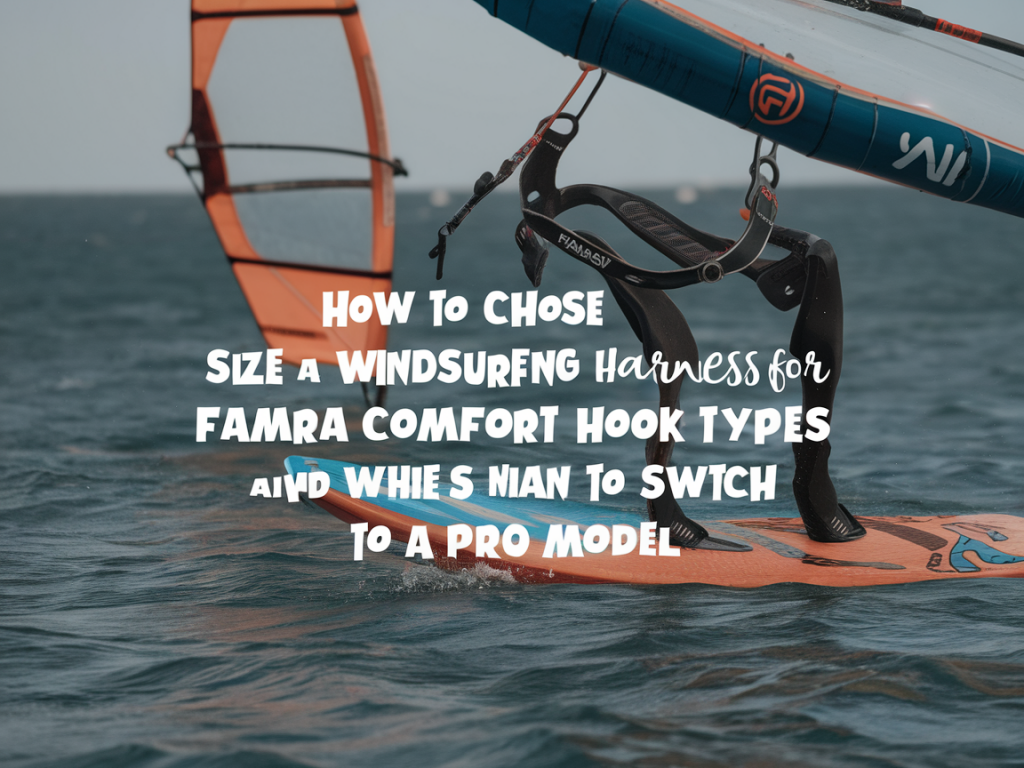
Famara is one of those spots where the wind, waves and long runs invite you to spend hours on the water — and a harness that fits poorly will ruin your session faster than a gust that drops out. I’ve learned to treat harness selection and sizing as part of my kit checklist: the right harness keeps you comfortable, reduces arm fatigue, and lets you connect to the sail in a way that’s efficient and safe for the local conditions. Below I share what I look for when choosing a harness for Famara, how to size it properly, the difference between hook types, and when it’s time to step up to a “pro” model.
Know the conditions: why Famara matters for harness choice
Famara on Lanzarote can be relentless — strong cross-onshore winds, choppy ranges, and powerful shore breaks depending on tide and swell. Because sessions are often longer and more physical, I favour a harness that balances support and freedom of movement. You don’t want a harness that’s too rigid when you’re doing wave moves, but you also don’t want one that causes lower‑back pain during long freeride or slalom runs.
Types of harnesses and when to use them
There are three main categories I think about:
Waist harness — Most versatile for Famara. It sits around the lower ribs and waist, giving good back support and freedom for rotation. Ideal for freeride, bump-&jump, and many wave riders.Seat harness — Sits lower, with straps under the thighs. Great for beginners, light wind or strapless learning because it transfers load to the hips and reduces pressure on the lower back. I’ll use a seat harness when winds are light and I expect long upwind tacks or lots of crash-relaunchs.Front-zip and full back-support harnesses (pro/competition) — These are stiffer, with more molded support for high-powered riding. They’re my go-to when I’m doing high-speed runs or racing, where minimizing body movement and maximizing power transfer matters.Hook types: classic vs spreader bar specifics
The hook (or spreader bar) is the interface between harness and rig. For Famara I pay attention to these elements:
Fixed bar vs modular — Fixed bars are robust and simple. Modular (removable) spreader bars let you change styles or replace worn parts.Single hook vs double hook — Most windsurfers use a single, centered hook. Double hooks are rare and used for specific freestyle setups.Wide vs narrow hook — A wider hook gives more room for the clew and boom, which I prefer on bump-and-jump days to avoid the boom hitting my ribs. Narrow hooks keep the load closer to the body and suit flat-water speed runs.Safety features — Look for quick-release clips and a well-designed cover over the hook to prevent catching lines or wetsuit fabric. A good spreader bar has a lockable pin or clip that stays secure but releases when you deliberately pull it.Comfort features that matter
Comfort isn’t just padding. These are the specifics I test in the first 20 minutes on water:
Curve and shape — A harness should wrap the lower back and flare slightly into the ribs without cutting into the hip bones. Modern molded panels and contoured shapes distribute pressure across a wide area.Lower-back support — For longer sessions I choose harnesses with reinforced lumbar support. It keeps my spine aligned and reduces fatigue.Pads and edges — Soft neoprene edges avoid chafing. Look for flat seams and thin edges where the harness meets the body.Fit flexibility — Adjustable straps and multiple buckles let you fine-tune fit for thicker wetsuits in winter or thinner suits in summer.How to size your harness for Famara — practical tips
Stand-up sizing advice can be confusing because brands use different systems (S/M/L, numbered sizes, waist vs hip measurements). I always try a harness on with the same wetsuit I’ll be using and follow these steps:
Put the harness on low on your back — the top edge should sit just under your ribs (or follow manufacturer guidance for seat harnesses).Tighten enough that it doesn’t ride up when you lean forward — but not so tight that you can’t breathe comfortably.Hook the spreader bar and pull the rig in. If the harness slides down or rotates excessively, it’s too big or shaped wrong for your body.If the spreader bar sits on soft tissue rather than the lower abdomen, try a smaller size or a different model with a higher cut.Check mobility — you should be able to rotate your torso and bend without the harness digging into your hips. | Waist / Hip (cm) | Typical size (brands vary) | Notes |
| 60–75 | XS / 1 | Very small frame: watch out for harness height vs ribs |
| 75–85 | S / 2 | Most women and smaller men: try on with current wetsuit |
| 85–95 | M / 3 | Standard fit for many riders |
| 95–105 | L / 4 | Large frames — ensure lumbar support |
| 105+ | XL / 5 | Some brands offer XXL — test for hip clearance |
When to switch to a pro model
A “pro” harness isn’t just expensive branding — it’s about a different balance of stiffness, support and range of motion. I moved to a stiffer, performance harness once my riding changed:
When I was doing sustained high-speed runs or racing — the stiffer shell kept my body aligned and reduced energy leak.When I needed precise power transfer for foil or small-wave slalom — the harness held the boom in a fixed relationship to my hips.When I was riding with high downhaul and outhaul loads — pro harnesses often handle greater loads with less deformation.If you mostly freeride or wave sail, don’t rush. A softer, more forgiving harness can be more comfortable and easier to pop out of during crashes. But if you find yourself constantly fighting the harness, lost power on tacks, or getting back pain, that’s the cue to step up.
Brands and models I trust
I test harnesses across sessions and seasons. Brands that consistently deliver for Famara-like conditions are Mystic, NP (NeilPryde), Ion, and Manera. Examples I’ve used and liked:
Mystic Stealth Waist — good lumbar support and a comfortable curve for all-day sessions.NP Fusion — narrower hook options and stiff support for speed work.Ion Apex — versatile with a soft edge finish that reduces chafe.Manera Flow — excellent spreader bar ergonomics and a low profile for wave riders.Final practical checklist before you buy
Try it on with your wetsuit and simulate body movement.Check how the spreader bar sits when you’re hooked in and leaning back.Test quick-release and ensure the bar won’t snag on your harness cover.Consider seasonal wetsuit thickness: you may need a different size or more adjustable straps.If possible, demo a harness on the water or rent one locally before committing.Choosing the right harness for Famara comes down to matching the harness’ shape and stiffness to how you ride. Prioritise a fit that doesn’t move, supports your lower back, and leaves you free to rotate for wave moves. Invest time in trying models — the right harness will let you surf the wind here for hours without counting the minutes until your arms give out.