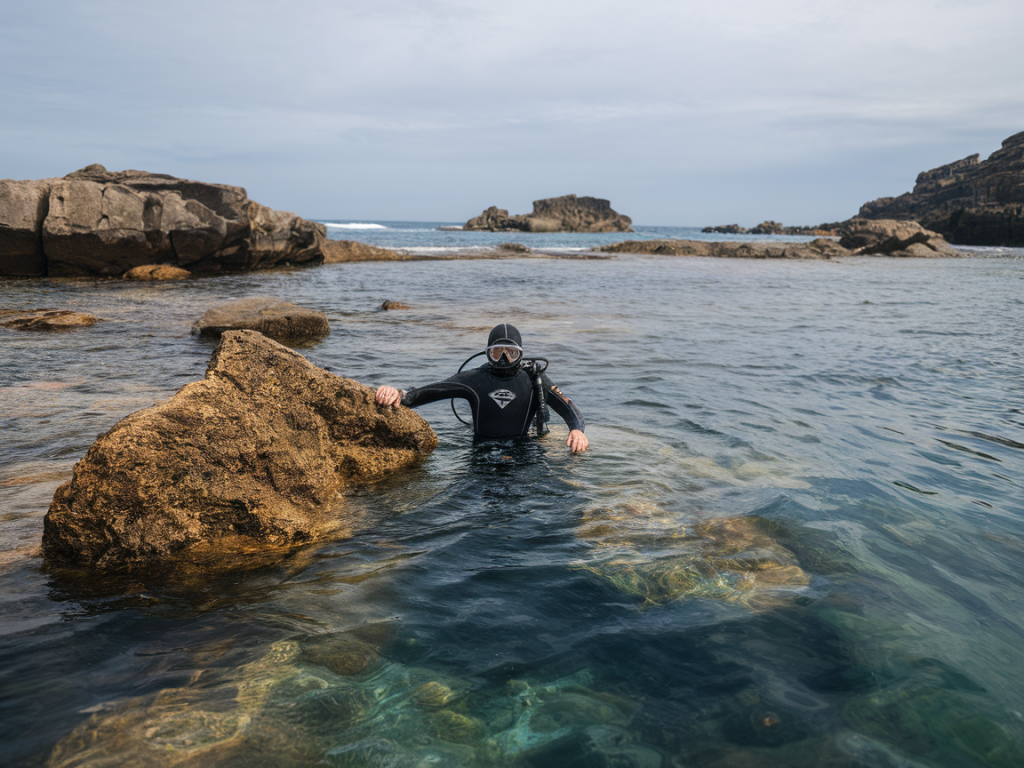
Playa Chica in Puerto del Carmen is one of those spots that looks deceptively simple from shore — a small rocky cove with clear water and a steady stream of divers entering and exiting. After guiding hundreds of shore dives here, I’ve learned that confident, safe entries and exits come down to three things: timing the sea correctly, choosing the right fin and movement techniques, and selecting kit that protects you and makes the transition smooth. Below I share practical, tested advice so you can enjoy Playa Chica’s reefs without ending a dive nursing sore feet or a ripped suit.
Why Playa Chica’s rocky shore needs respect
Playa Chica is sheltered compared with other Lanzarote coastlines, but its shallow rocky shelves, submerged boulders and occasional surge create pinch points where divers can get cut, knocked or tangled. Most problems happen within the first 10–15 metres of depth: mis-timed entries, poor finning that bangs you into rock, or ill-fitting kit that catches on rough surfaces. I always tell my students that this beach rewards good planning — a calm, prepared entry looks effortless because it is deliberate.
Timing: tides, swell and local windows
Timing your slot at Playa Chica is the first piece of the puzzle.
- Tide: I prefer mid-to-high tide for entries because it softens the ledges and reduces the chance of stepping on exposed rocks. Low tide makes the first stretch shallow and awkward.
- Swell and wind: Even a small swell can create surge over the rocky shelf. West or northwest swells are less favourable — if you see a long-period swell, push the dive later or choose a boat/alternative shore. Onshore wind can churn the surface and reduce visibility.
- Time of day: Early morning sessions often mean calmer seas and fewer swimmers. Midday may be busier with snorkelers and family groups around the entry point.
- Local windows: Ask a dive center or a local guide — they usually know the micro-window for safe entries depending on seasonal change. I’ll often call the nearest centre to confirm conditions before heading out.
Approach and entry technique
I treat Playa Chica entries like a short technical operation: observe, plan, move. Stand back for a minute and watch the surf pattern and people already in the water. Identify a clear route with few algae patches and a gentle gradient.
- Footwear: I almost always wear sturdy neoprene booties (3–5mm) for the walk out. They protect against sharp rock and give grip on slippery surfaces. Thin summer socks or bare feet feel nice but risk cuts and a painful exit.
- Weighting and mask: Put weight on only when you need it. If you add weights before the walk, they can make your balance awkward on the rocks. I often carry my belt open or clipped to my BCD until I reach deeper water.
- Regulator and mask placement: Keep your mask on and regulator in, but make sure the second stage is clipped to the BCD shoulder to avoid dragging over rocks. A short lanyard for the mask helps keep it accessible while preventing it from snagging.
- Step-through, not jump: The cove is small — a careful step-through entry prevents banging into submerged rocks. Take slow, deliberate steps, and don’t rush as you cross the shallows.
Finning style and propulsion choices
Your finning technique determines how gently you negotiate the first metres of reef.
- Fins choice: For Playa Chica I prefer medium-stiff full-foot or open-heel fins with blades that offer good thrust without exaggerated kickback. Split fins (e.g., Cressi Blade, Mares Avanti Quattro) are efficient for long swimouts but can lack the sudden burst sometimes needed to clear an unexpected surge. Stiff blades (e.g., Scubapro Seawing Nova) deliver immediate power but are tiring in debris-heavy conditions.
- Kick type: Use short, controlled flutter kicks while near the rocks. Avoid large frog or scissor kicks which spray sand and increase the chance of contacting the seabed. When you meet surge, switch to stronger, controlled strokes aimed slightly downward to keep forward momentum.
- Body position: Stay low and streamlined to reduce the chances of your fins hitting rocks. A slight head-down angle helps in shallow water by keeping your fins clear of the substrate.
- Buddy spacing: Keep at least an arm’s length from your buddy on the exit and entry to prevent fin strikes. Communicate before you start the approach so your buddy knows whether to follow or lead.
Kit choices that make the rocky shore easier
Smart kit choices reduce stress on a rocky shore entry and protect both you and your equipment.
| Item | Why I use it |
| Neoprene booties (3–5mm) | Protect feet, improve grip on wet rock, prevent cuts during walk in/out |
| Open-heel fins + adjustable straps | Easy to put on/off, strap adjustment helps when entering shallow surf |
| Short weight belt or integrated weights | Can be loosened quickly for the shallow walk; integrated weights reduce snag risk |
| Button or clipped SMBS | Quick surface marker for exit and to signal boats if needed |
| Hard case or neoprene camera housing | Protects camera from knocks against rock; easy to drop in shallow water |
| Durable gloves (thin) | Protect hands when steadying on rock — avoid thick gloves that reduce dexterity |
Exits: planning and practice
Exits are where I see the most scrapes. Plan your exit before you descend — identify the shallowest, clearest route back and a sheltered spot to remove fins and weight if needed.
- Rehearse the exit with your buddy at depth: swim the route slowly on your second-to-last minute to visualise the rocks and ledges.
- Approach the shore facing into the swell where possible; turning your back on surge can throw you onto rocks.
- Remove fins only when you are in waist-deep water with a stable footing. If the shelf is steep, consider removing them deeper and doing a short finless walk in boots.
- If you have difficulty exiting because of surge or slippery rock, inflate your BCD slightly to increase buoyancy and keep you off the bottom while you reposition.
Common mistakes I see and how to avoid them
- Overweighting: Too much weight makes walking awkward and increases the chance of stumbling. Trim weights for the shore entry and do a quick buoyancy check at depth.
- Ripping gear: Leaving the weight belt clipped in place during the exit can cause it to snag. Keep quick-release accessible and consider integrated weight pockets.
- Panic in surge: Slow, controlled breathing and steady signals to your buddy calm the situation. If you’re uncomfortable, surface and swim along the coast to a safer exit point.
Playa Chica is a brilliant shore dive when respected. With the right tide window, focused fin technique and protective, practical kit, the entry and exit become routine rather than risky. Dive smart, watch the conditions, and enjoy the clear water and volcanic scenery — if you want, drop me a line on the contact page for a guided trip or a quick local tip before you go.