I’ve spent a decade exploring the coast around La Santa — from calm sheltered bays to the rocky open stretches that demand respect. If you’re planning to snorkel or freedive here, understanding tides and currents is the single most important safety and enjoyment hack you can learn. In this article I’ll share how I read local conditions, the practical tools I use, and the sensible habits that keep sessions safe and fun.
Why tides and currents matter at La Santa
La Santa sits on the western coast of Lanzarote where Atlantic swell, trade winds and the local shoreline geometry combine to create unpredictable water movement. Even on a sunny day a strong current can make a shallow reef feel like a conveyor belt — tiring you out quickly and pulling you away from your planned exit. Tides change water depth over reefs and rocks (affecting where you can enter or exit). Currents change how you drift relative to shore and where you’ll surface. For freediving, currents also affect downline and safety-buddy positioning.
Basic concepts I always check before going in
High and low tide times: Know when the sea is at its highest and lowest. Some rocky entries that are fine at high tide become dangerous at low tide because of exposed sharp rocks or stronger surge.Current direction and strength: Currents around La Santa can run north or south along the coast, or set offshore with swell. Strength matters: a gentle drift is manageable; a strong cross-shore current is not.Swell height and period: Swell creates surge and sets up local rip currents. Long-period swell (12+ seconds) brings powerful, slower-moving waves that push harder over reefs.Wind speed and direction: The prevailing NE trade winds can create surface chop and push you downwind. Light offshore winds can make snorkeling mirror-flat — ideal.Tools and sources I use
I combine forecasting tools, local observations and common sense. No single source is perfect — the trick is to cross-check.
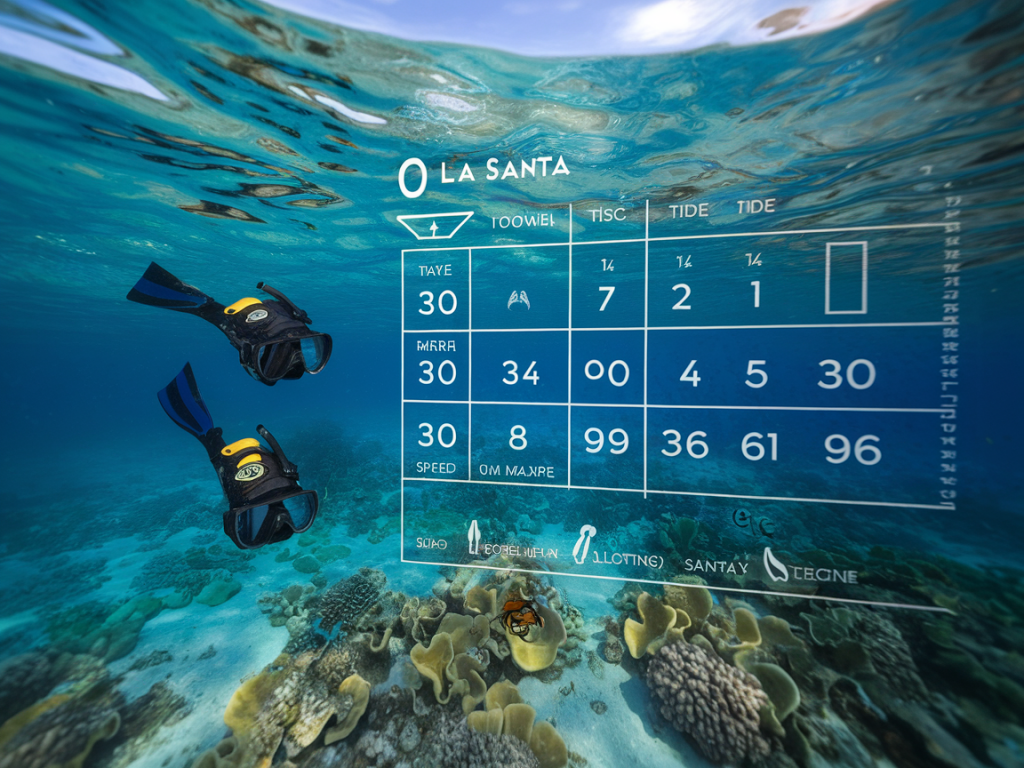
Tide tables: I use the UK Hydrographic Office tide tables and the Spanish port authority site for official times. For quick checks I use the app “Tide Times” or “Magicseaweed” which often lists local tide times for Playa La Santa.Swell and wind forecasts: Magicseaweed (MSW) and Windy are my go-tos. MSW gives swell period and direction; Windy is superb for visualising wind patterns and gusts.Current warnings and local reports: Local dive centres, surf shops and WhatsApp groups are gold. I’ll call a dive centre in La Santa or Famara and ask about current conditions. Local fishermen also notice subtle changes faster than anyone online.On-site checks: Never skip a visual and tactile check once you arrive. Watch the water from the shore for 10–15 minutes. Look for surface lines, foam, and floating debris showing the flow of the water. Toss a small stick or a leaf (only natural material) to see surface speed and direction.How to interpret tide times for La Santa entries
Tide tables give you times and heights, but here’s how I translate that into action at La Santa:
High tide: Easier water over reefs, safer entries and exits in many spots. However, high tide with large swell can create heavy surge over shallow reefs — you’ll still need careful timing with sets of waves.Low tide: Clearer water (less stirred up) but more rocks and surge on shallow reefs. Some coves become unusable at low tide, so I mark alternative exits on my map.Slack water: The short period around high or low tide when currents reverse is often the calmest. I often aim to enter 30–60 minutes before slack (depending on local reef depth) and plan my session to finish around slack time.Reading currents visually — what I look for
When I scout a site I check:
Surface ripples and foam lines: These show direction and relative speed. Thin foam lines trailing a rock indicate gentle flow; broken, chaotic foam means turbulent water.Floating objects: Buoys, seaweed strings and paddling surfers show how fast the surface is moving compared to shore.Wave patterns over reef: Look at how waves break — uniform neat breaking means predictable conditions; irregular breaking with channels of less-breaking water can indicate rip channels where stronger currents run.Bird and fish behaviour: Birds feeding close to shore often indicate calmer water. Schools of fish pushed into certain zones can reveal current lines.Practical safety rules I follow
Never go alone: Always go with a buddy and agree on surface signals and an exit plan. For freediving, use a line and a surface buoy so your buddy can track you.Use a surface marker buoy (SMB): I always carry a bright SMB — it makes you visible to boats and helps mark your location if you drift. Brands I trust include Oceanic and Cressi for durable SMBs.Pick your entry and exit wisely: If you spot a channel where the water is calm, use it. Avoid areas where waves are funnelled into a narrow rocky gap — that’s where surge can pin you.Plan the drift, don’t fight it: If a current is present and manageable, plan to drift with it toward an accessible exit. Fighting a current from the outset wastes energy and increases risk.Set time and distance limits: I set a maximum bottom-time, turnaround time and maximum drift distance from the planned exit. If any of those are exceeded, we surface and head in.Simple checklist before every session
| Check tide times | Confirm high/low and slack periods for the site |
| Check swell & wind | MSW/Windy: note height, period, direction and gusts |
| Local intel | Ask a surf/dive shop or local boat operator |
| Visual inspection | Watch for 10–15 minutes; test with floating object |
| Equipment | SMB, buddy line (freediving), mask, fins, wetsuit & knife |
Examples from my logbook
One of my clearest lessons came after a morning freedive session that began at high tide with light swell. I saw a steady northward surface flow; we drifted gently and aimed to exit at a small cobble beach 300 m down the coast. About 45 minutes in the swell period increased and the current paired with an offshore set pushed us wider than expected. Because we had an SMB and had agreed on turn-around distances, we surfaced early and swam toward a rocky point where we could climb out safely. The take-away: even easy conditions can change quickly; redundancy and communication keep you safe.
Another tip: I sometimes use a small GPS watch (Garmin watches work well) to track a session’s drift. That helps me learn the local patterns so the next time I can plan a more efficient route.
Local spots and particular cautions
At La Santa there are sheltered coves suitable for beginners and exposed reef edges that attract experienced freedivers and spearfishers. Famara’s influence can bring strong alongshore currents on certain tides — if you’re new to the area, start in familiar coves and ask locals about recent conditions before progressing to open reef.
If you’d like, I can prepare a printable entry/exit map for La Santa with tide windows and recommended SMB routes — just tell me whether you prefer a beginner or advanced plan and I’ll tailor it to your needs.