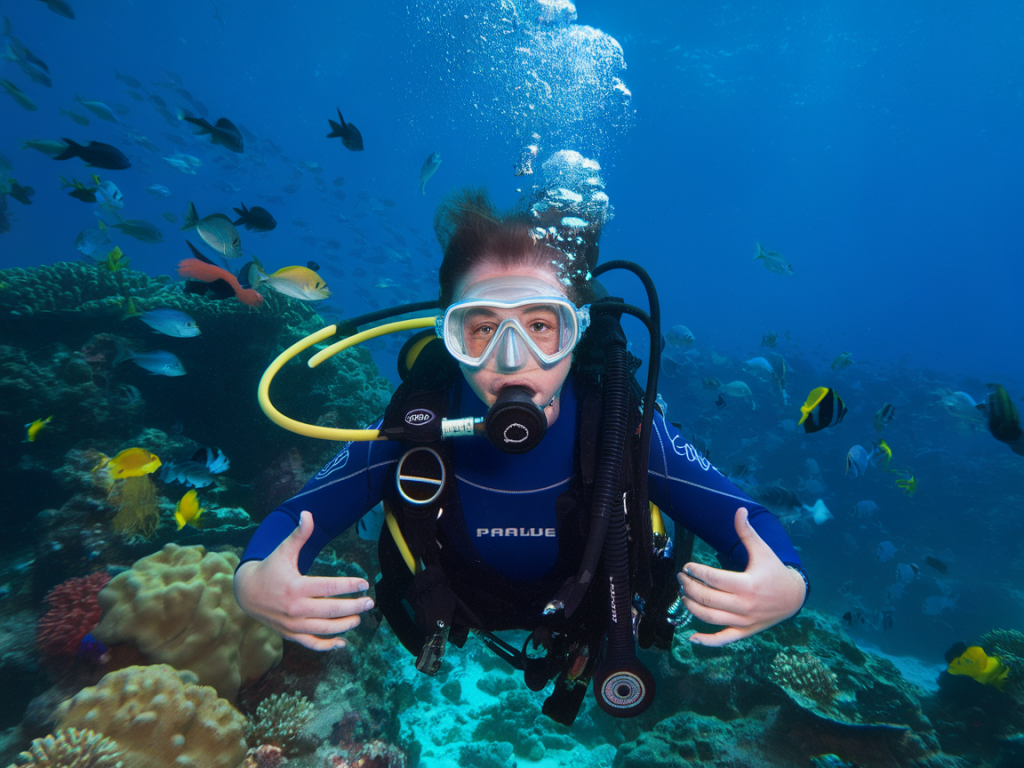
First dives are magical — weightless, quiet and full of new sensations — but they can also throw up a few physical surprises that spoil the moment if you don’t know how to handle them. Over the years I’ve guided hundreds of first-time divers around Lanzarote and across the Canary Islands, so I’ve seen the most common little emergencies and the simple fixes that get people smiling again. Below I cover mask squeeze, ear equalisation problems and other typical first-dive issues, with practical, quick-to-apply solutions you can use right away.
Mask squeeze: why it happens and how to fix it fast
Mask squeeze is that painful feeling across your face or around your nose as you descend. It happens because the air pocket inside your mask loses pressure relative to the surrounding water pressure. If you don’t re-pressurise the mask as you go down, the mask will press into your face.
Quick fixes I use and teach:
Before descent, equalise the mask by gently breathing through your nose into the mask (like a small nose exhale) as you go down. You should feel the pressure release.If you already feel squeeze, ascend a little (just a few metres) to reduce surrounding water pressure and then re-equalise the mask.Check the mask fit ashore: it should seal without straps. If you’re using a new mask, adjust the strap so it’s snug but not overly tight — people often over-tighten because they worry about leaks.For people with glasses or orthodontic braces, consider masks with extra internal volume or a soft skirt. I often recommend low-volume masks (like the Cressi Nano or Mares Pure) for easier clearing and less squeeze potential.Ear equalisation problems — simple techniques that work
Ear equalisation is the number one cause of aborted descents. The eustachian tubes must open to equalise middle ear pressure; if they don’t, the eardrum experiences pain or even injury.
Techniques I teach and use:
Valsalva manoeuvre: pinch your nose, close your mouth and gently blow — don’t force it hard. This is the most common technique but can be ineffective for some people if done incorrectly.Toynbee manoeuvre: pinch your nose and swallow. This combines the muscles used for swallowing with the sealed nose and often works when Valsalva doesn’t.Frenzel manoeuvre: close your glottis, pinch your nose and use the back of the tongue to push air up into the eustachian tubes. It’s more technical but ideal for equalising EARLY and with less force — I teach this to divers who plan deeper dives.Equalise early and often — start on the surface and equalise at tiny depth changes (every metre or two). If you wait until you feel pressure, it may be too late.If you can’t equalise, stop descent and ascend slightly. Never dive past the point where equalisation becomes painful.Avoid diving with a heavy cold or congestion. If you have a blocked nose, topical nasal decongestants (oxymetazoline) used cautiously an hour before diving can help, but they’re not a guarantee and not recommended for frequent use. When in doubt, sit out the dive.Mask flood and clearing
A leaky mask is one of the easiest things to fix underwater but it can unsettle new divers. Here’s how I handle it calmly and efficiently:
If water comes in, tilt your head back slightly and exhale through your nose while pushing the bottom of the mask away with your fingertips — the water flows out the bottom and the mask reseals.Practice mask clearing in shallow water before the dive. Repetition builds confidence, and confidence keeps you relaxed underwater.Anti-fog tip: clean the mask with baby shampoo or anti-fog products (or saliva in a pinch) before the first dive. I reapply only lightly and always rinse once — too much product can irritate eyes.Regulator panic or mouthpiece problems
First-time divers sometimes panic when they get water in the regulator or when they feel pressure they’re not used to. Calm, practiced responses are everything.
If the regulator floods, clear it by exhaling a short blast while pressing the purge button, then take a calm breath in. Breathing out forcefully removes water from the second stage.If you lose your mouthpiece, switch to your alternate (octopus) or buddy’s second stage. We always practice this during the briefing — every diver should be comfortable switching to an alternate supply.Keep your chin up and jaw relaxed. A tight jaw makes holding the mouthpiece uncomfortable and increases anxiety.Buoyancy issues: heavy legs or uncontrolled ascent
Maintaining neutral buoyancy is a skill that takes practice. On first dives people often descend too fast or struggle to stay level.
Pre-dive, check weight in shallow water. Too much lead is the common culprit. I prefer to add weight in small increments so divers know exactly when they’re neutrally buoyant.Use your lungs for small adjustments: inhale to rise a little, exhale to drop. Don’t reach for weights or struggle with fins.Fine-tune BCD inflation gently. Rapid inflation can lead to uncontrolled ascent; if that happens, vent a little air and do a slow ascent while breathing normally.Muscle cramps, cold and seasickness
First-time divers sometimes get cramps or feel chilly and queasy. These are manageable if you prepare and act quickly.
Prevent cramps by staying hydrated and stretching before the dive, especially calves and hamstrings. If a cramp strikes, flex the affected muscle and massage it gently. Switch to a relaxed fin style (slow, controlled kicks) until you recover.For cold, wear the right wetsuit thickness — around 5mm in Lanzarote’s cooler months, 3mm may be enough in summer. Hoods, gloves and booties add comfort on longer dives.Seasickness can be reduced by eating a light, non-greasy meal a couple of hours before diving, staying on deck in fresh air, and focusing on the horizon when on the boat. Over-the-counter options like meclizine work well if you know you’re prone to motion sickness.Lost orientation, panic or running out of air
Panic is contagious underwater, which is why we focus on calm problem-solving. I always prepare divers to handle the major emergencies before we enter the water.
If you feel disoriented, stop, signal to your buddy and orient using your compass and the guide line (if on a wreck or wall dive). Breathe slowly and regain composure.Running low on air: switch to your buddy’s octopus, ascend following the buddy and safety stop procedures, and surface calmly. Always check your cylinder pressure regularly — make it a habit every five minutes.Practice emergency drills (out-of-air, buddy breathing, controlled ascent) with a professional instructor until they become second nature. Rehearsal equals calm when it matters.Small gear checks that prevent big problems
Most first-dive issues are preventable with a short equipment checklist:
Mask fit and strap tension checked on land.Regulator mouthpiece secure and alternate second stage clipped to chest strap.Weights positioned correctly and quick-release tested in shallow water.BCD inflator connected and dump valves checked.Computer or depth gauge and pressure gauge functioning and visible.On Scubalanzarote Co I always stress that skills and preparation beat panic. I’ve helped divers recover from mask squeezes, re-learn gentle equalising techniques and move past their first regulator surprise through calm coaching and repetition. If you’re planning your first dive off Papagayo or a guided wall dive at Playa Blanca, tell your instructor about any past ear issues or cold problems — we’ll adapt the plan and give you targeted practice until you’re comfortable. If you want, I can recommend surface-friendly masks and low-volume models that make clearing and equalising easier, or a simple pre-dive routine to practise the few techniques above so that your first underwater memories are all about the fish and the lava scenery, not discomfort.