Diving

How to train breath-hold and safety drills for freediving in Lanzarote’s shallow bays

How to train breath-hold and safety drills for freediving in Lanzarote’s shallow bays

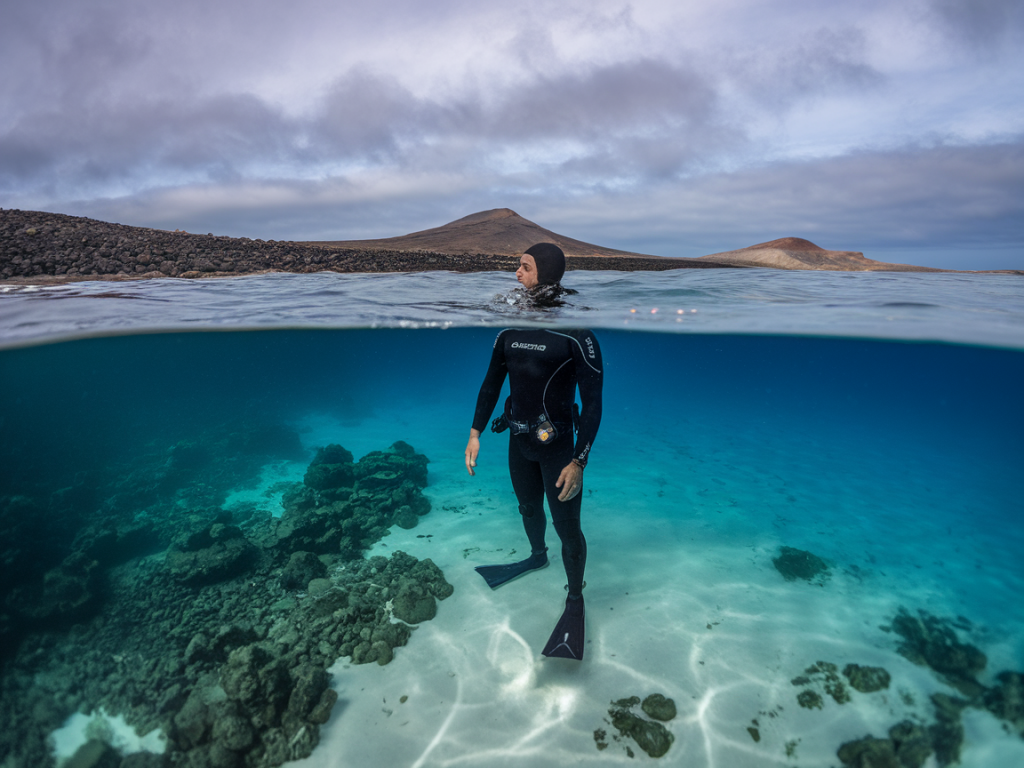
I spend a lot of my time in Lanzarote’s shallow bays — Papagayo, Playa Chica, Playa Honda and the calmer coves of the south — teaching freediving basics, running safety drills and training my breath-hold. These spots are perfect for practising because they combine clear water, easy exits and predictable tidal behaviour. Below I share how I structure breath-hold training and safety drills that you can reproduce, whether you’re a curious beginner or an intermediate freediver wanting to sharpen skills. Safety and conservative progression are my non-negotiables.

Why train breath-hold in shallow bays?

Shallow bays offer several advantages: predictable, relatively warm water; good visibility; and quick access to the surface and shore if needed. They let you focus on technique—relaxation, efficient finning, and equalisation—without worrying about deep-water pressures. For freediving training, I separate sessions into:

  • breath-hold conditioning (static/dynamic drills),
  • skills and equalisation practice,
  • buddy safety and rescue drills.
  • Basic rules I always follow

    I treat every breath-hold session like a dive: conservative, well-planned and with a competent buddy. My checklist before entering the water:

  • always train with a buddy who is briefed and attentive (no headphones, no reading);
  • agree on hand signals and surface protocols before each set;
  • keep sessions short and conservative—never chase the limit;
  • stay hydrated and avoid heavy meals or alcohol before training;
  • use a float line and a surface marker if you’re off a rocky shoreline;
  • check wind, swell and currents — Lanzarote’s bays are mostly calm but can change quickly near headlands.
  • The warm-up: breath and movement

    I never start with long breath-holds. My warm-up is about blood oxygenation and relaxation:

  • 5–10 minutes of relaxed surface breathing: slow diaphragmatic breaths, in through the nose, out through the mouth;
  • light mobility on land or in the water (neck rotations, shoulder circles, gentle torso twists);
  • 3–4 easy dynamic swims (short distances) with relaxed breathing between each;
  • 3 practice equalisation attempts while swimming slowly at depth of 1–3 m, focusing on mouthfill or Valsalva depending on comfort.
  • Static and dynamic breath-hold drills

    Static apnea (floating still) and dynamic apnea (swimming horizontally) build different adaptations. I alternate them across sessions to train both relaxation and movement efficiency.

    Static apnea (surface float) — great for CO2 tolerance and relaxation.

  • Lie face-up or on your stomach with a float or reef-safe buoy for support;
  • do 4–6 short sets: comfortable breath-hold durations where you stop well before discomfort; rest for 2–3 times your breath-hold with relaxed breathing;
  • focus on long, slow exhales and soft jaw/face to keep the neck relaxed;
  • increase length gradually across weeks; never push to blackout or even near-blackout sensations.
  • Dynamic apnea (shallow swim) — works on technique and oxygen use while moving.

  • Use a long narrow swim: I typically do 25–50 m swims in a protected bay, or short shuttle laps between buoys;
  • fin technique is crucial: long, slow strokes with the hips doing most of the work; I often train with Freedive fins like OMER or Cressi Gara models for a balance of power and control;
  • start with 4–6 repeats at comfortable distances, surface rest equal to 2–3 times swim duration;
  • progress by increasing distance or adding a small weight belt for better trim, but only under supervision.
  • Sample beginner session (shallow bay)

    PhaseActivityNotes
    Warm-up10 min relaxed breathing + mobilityStay near shore or float
    Static sets4 x 30–60 s holdsRest 2–3 min between sets
    Dynamic sets6 x 25 m swims (easy)Surface rest 2x swim time
    SkillsPractice equalisation and duckdivesShallow depth, repeated practice
    Cooldown5 min light swimming + breathingHydrate and note session

    Equalisation and depth skills in shallow water

    For many divers, equalisation is the limiting factor. In shallow bays I use progressive drills:

  • practice mouthfill and Frenzel on the surface and at 1–3 m until comfortable;
  • do repeated shallow descents to 3–6 m focusing on relaxed descent and equalisation every metre;
  • use a short lanyard or rope marker off the buoy to practice orientation during descent;
  • never yank or force equalisation—stop, ascend a metre or two and try again; pushing can cause ear barotrauma.
  • Buddy safety and rescue drills

    Learning to save someone is as important as improving your own breath-hold. I run simple, repeatable drills in shallow bays where there’s space to practice without panic:

  • surface protocol: the diver surfaces, displays the OK signal then signs “I’m fine” or “need help” clearly;
  • passive rescue: practice spotting a limp diver at the surface, approach calmly from behind, secure under the arms and tow them to shore or the buoy line;
  • active rescue: simulate a conscious but struggling diver and practice a short tow while keeping their airway clear;
  • in-water recovery: for a diver who’s unresponsive, practice bringing them face-up, chin support, and removing from the water with minimal neck movement;
  • CPR and first aid: I refresh these skills with a course (EFR/First Aid and CPR) yearly and encourage buddies to do the same.
  • Common questions I get

    How often should I train? Twice a week is a good frequency for steady progress without overreaching. Rest days are essential—the body adapts between sessions.

    Can I train alone? Never. Even in shallow water, blackouts are possible. Always have an attentive, briefed buddy in the water.

    What equipment do you recommend? A comfortable mask and low-volume snorkel, long freediving fins (Cressi Gara, Mares Razor, OMER), a thin wetsuit for warmth (3mm in most Lanzarote bays), a buoy/float and a weight belt with quick-release. For rescue practice, a throw line and a rescue tube are useful on shore.

    Environmental and local tips

    Respect the marine life and the shoreline. Lanzarote’s bays can have fragile seagrass meadows and endemic species. Avoid touching the seabed, use reef-safe sunscreen and park on designated areas. I usually choose early mornings for training—the water is calmer, visibility is best, and there are fewer boats.

    If you’d like a structured session, I run guided freediving and safety clinics across the island. I bring short, practical CO2 and O2 tables (adapted conservatively for shallow bay use), basic gear and an emphasis on skills you’ll actually use around Lanzarote. Questions about a specific cove or a custom lesson? Drop me a message through the contact page on Scubalanzarote Co — I love tailoring sessions for different levels and goals.
    You should also check the following news:

    Selecting the best dive computer for Atlantic conditions: Suunto, Garmin or Mares compared
    Gear Reviews

    Selecting the best dive computer for Atlantic conditions: Suunto, Garmin or Mares compared

    I get asked all the time which dive computer I recommend for diving around Lanzarote and the rest...

    Windsurf rental vs bringing your own kit: what saves money and what improves performance
    Windsurfing

    Windsurf rental vs bringing your own kit: what saves money and what improves performance

    When I first moved to Lanzarote I had the classic kit-carrying mindset: if you want to sail well,...