I love long runs down Famara because they feel like a slow-motion ocean voyage: wide open beach, glassy seas at low wind, and that endless ribbon of sand and cliffs you can chase for kilometres. Getting comfortable with long light-wind runs takes patience and a plan — especially at Famara, where thermals, land effects and tidal changes are part of the game. Below I share a six-week progression I use with students and friends, based around Fanatic boards and local drills that make those long down-the-beach sessions feel effortless.
Why a focused six-week plan?
Light-wind endurance is as much about technique and gear setup as it is about strength. In stronger winds you can rely on power; in light winds you need efficiency, balance and subtle pumping. A short, structured programme builds the right habits: rigging for maximum drive, efficient pumping, wind-reading for route choice, and the fitness to stay composed for long runs. I designed this plan to be realistic for people who can train 2–4 sessions a week and want tangible progress before the next Famara window.
Essential gear I recommend
- Board: Fanatic FreeWave (for freeride, easy planing) or Fanatic Sky Wing foil board if you’re moving to foiling — both are great for light-to-medium conditions.
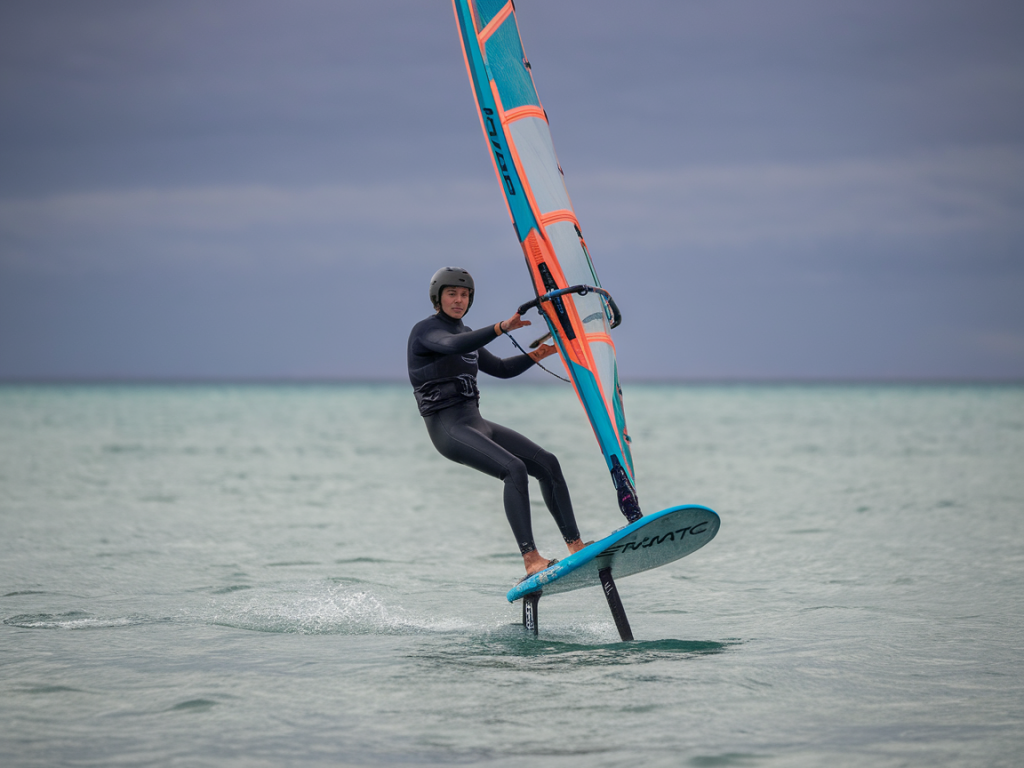
- Sail/Wing: For traditional windsurfing aim for larger sail sizes (7.5–9.0 m² depending on weight). If you wing or foil, a Fanatic Sky Wing 5–7 m is ideal for Famara’s typical sea breeze windows.
- Mast/boom: Use a lighter, more responsive mast (IMCS tuned to your sail) and position the footstraps slightly back when you need early drive; move them forward for better upwind balance during drills.
- Pump kit and leash: A footstrap leash and a small repair kit — long runs mean more time away from shore.
- Electronics: GPS watch or Polar/Garmin strap for pacing sessions and tracking distance.
Key technique points I focus on
- Early planing and glide: Rig for low-end pull — lower downhaul and a bit more outhaul to catch gusts, but keep the mastfoot placement as recommended by the sail brand. Use a flatter boom position for better control.
- Pumping economy: Short, efficient pumps rather than exaggerated ones. I train students to isolate arm and hip movement so each pump adds glide without exhausting shoulders.
- Stance and balance: Weight distribution slightly forward while accelerating, then sit back to keep the board tracking when gliding.
- Line choice: Read the channel — sometimes hugging closer to the cliffs picks up gusts; other times the middle sweeps more consistent wind. Check tide, swell and wind layers before committing.
- Transitions: Practice smooth tacks and jibes at low speed — loses less momentum and keeps runs continuous.
Six-week progression (overview)
| Week | Main focus | Sessions per week | Session types |
|---|---|---|---|
| Week 1 | Foundations: rigging & balance | 2–3 | Short beach rig checks, flat-water balance drills, easy downwind runs |
| Week 2 | Pumping technique & early planing | 2–3 | Pumping intervals, boom-hand timing, off-the-wind runs |
| Week 3 | Endurance & pacing | 3–4 | Long steady runs, GPS pacing, recovery drills |
| Week 4 | Course reading & route planning | 2–3 | Shore scouting, variable-line practice, jibe efficiency |
| Week 5 | Speed-sustained runs & transitions | 3 | Long runs with higher cadence pumping, efficient tacks/jibes |
| Week 6 | Simulation week: 10–15 km runs | 2–3 | One simulated long run + technique sessions |
Week-by-week drills
Below are the drills I use most. Each session starts with a 10–15 minute warm-up on the water (easy sailing, mobility) and finishes with a debrief and short shore stretch.
Week 1 — Foundations
- Shore rig check: set up sails for low wind, mark a comfortable downhaul and outhaul point (I keep a small tag at the mast base for reference).
- Balance drills: stand on the board, eyes closed for 20–30 seconds, then add sail handling — this builds proprioception.
- Short downwind hops: 500–800 m runs focusing on steady stance and foot placement.
Week 2 — Pumping & early planing
- Pump sets: 6 × 30-second pump bursts with 60-second glide; focus on hip snap and small, frequent pumps.
- One-leg balance: ride with one foot out of the strap to force core engagement and smoother pump strokes.
- Video review: I often film students to show where they over-pump or bend their arms.
Week 3 — Endurance & pacing
- Steady-state runs: 3 × 20–30 minute continuous sails at conversational effort with 5-minute rests between. Use GPS to monitor speed consistency.
- Recovery drills: practice lowering power to rest without stopping the glide completely — useful during long Famara runs.
- Off-water cross-training: 2 sessions of paddleboarding or cycling to build aerobic base.
Week 4 — Reading the beach & route planning
- Shore scouting: walk up and down Famara at low tide and note wind streaks, tidal channels and gust shadows from the cliffs.
- Variable-line practice: sail three different lines (close to shore, middle, outside) and note which is best for maintaining glide.
- Jibe timing: practice jibes at low speed—smooth weight transfer keeps momentum.
Week 5 — Sustained speed & transitions
- High-cadence runs: 4 × 10–15 minute runs where you slightly increase pump frequency to keep top glide longer.
- Transitions pack: string together 3–4 jibes with minimal slowdown — simulate beach-to-beach tactics.
- Nutrition: experiment with small, easy-to-digest snacks (banana, energy gel) during longer sessions so you know what works on the water.
Week 6 — Simulation & race pace
- Long simulated run: pick a 10–15 km route (Famara has great stretches). Start early in the tidal window, keep to your planned lines and practice micro-recoveries.
- One technical tune-up: 45–60 minutes of focused drills (pumping, tacks, jibes) to reinforce efficiency.
- Debrief and maintenance: check wear on pads, footstraps and fin; do a gentle mobility session the day after a long run.
Common questions I get
- Should I switch to foil? Foiling transforms long light-wind runs if you’re ready. The Fanatic Sky Wing setup gives fantastic range and efficiency; however, start with a mixed programme — use a freeride board for technique and switch to foil once your pumping and transitions are solid.
- How many sessions before I see improvement? Most sailors notice better pump economy and longer glides after about 3–4 consistently trained weeks. Endurance and route reading improve more gradually.
- What about tides and timing? Famara’s tidal state changes the beach profile and wind channels. I plan long runs around mid to high tide for safer water depth and cleaner wind; always check local forecasts and talk to a local centre before a long solo run.
If you want, I can tailor this six-week plan to your current kit and fitness level — and suggest specific Fanatic board models and sail sizes based on your weight and experience. Drop me a line via the contact page and tell me your current setup and Famara goals.